Description
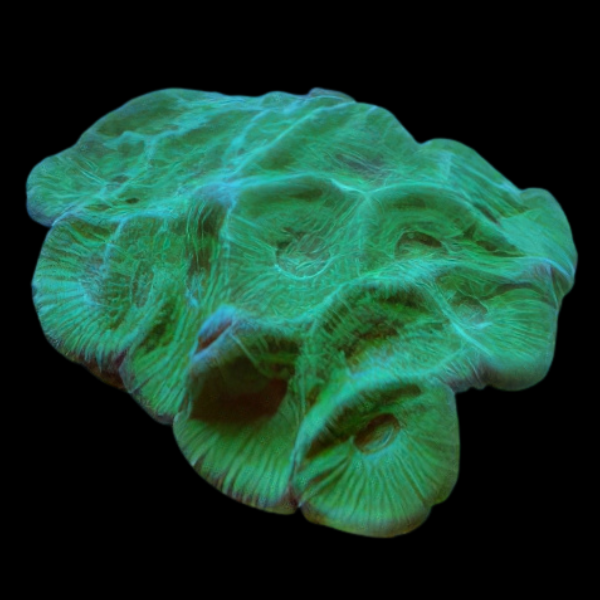
Pineapple Prism Hard Coral (Moseleya sp.)
(Also known as Pineapple Coral, Prism Coral, or Large Polyp Brain Coral)
Overview
The Pineapple Prism Hard Coral (Moseleya sp.) is a rare and striking large-polyp stony (LPS) coral, admired for its geometric, prism-like corallite structure and vivid colouration. Often displaying radiant shades of green, gold, purple, and pink with glowing centres, this coral resembles the intricate texture of a pineapple skin — hence its name. Its fleshy polyps expand during the day to form a smooth, quilted surface, making it a true centrepiece coral. While hardy under stable conditions, Moseleya prefers low to moderate flow and benefits from consistent feeding and strong, indirect lighting to maintain its colour and health.
Origin
Native to the Indo-Pacific region, including the Great Barrier Reef, Coral Sea, and parts of Indonesia and the Solomon Islands. Commonly found in shallow reef flats and protected lagoon slopes, where water movement is gentle and sunlight filtered.
Feeding
The Pineapple Prism Coral is photosynthetic, housing zooxanthellae that provide most of its energy. However, regular target feeding enhances polyp expansion and colouration. Feed 1–2 times per week with:
-
Mysis shrimp or finely chopped seafood
-
Marine plankton or LPS coral foods
-
Coral pellets or reef roids-style powdered blends
Feed in low flow and preferably at dusk, when feeding tentacles extend for optimal capture.
Lighting
Moderate to high lighting. Provide bright, diffused light from LED, T5, or hybrid systems.
-
PAR range: 120–250 µmol/m²/s
-
Gradually acclimate to high-intensity light to avoid bleaching.
-
Blue-spectrum lighting enhances its fluorescent hues, especially greens and golds.
Water Flow
Low to moderate, indirect flow. Gentle, variable currents allow full polyp expansion and help prevent detritus from settling between corallites. Avoid strong, direct jets that can damage the fleshy tissue.
Placement
-
Place on lower to mid-level rockwork or a stable sandbed, depending on light intensity.
-
Allow 10–15 cm (4–6 inches) of space around the coral to prevent aggression and allow natural expansion.
-
Ensure placement is secure — colonies are heavy and can damage nearby corals if dislodged.
Tank Mates
Reef safe with caution. Compatible with:
-
Peaceful reef fish (gobies, tangs, blennies, wrasses, clownfish, etc.)
-
Small invertebrates (snails, shrimp, hermit crabs)
-
Other peaceful LPS or soft corals with adequate spacing
Avoid:
-
Aggressive or stinging corals (e.g., Galaxea, Hydnophora)
-
Butterflyfish or large angelfish that may nip at the coral’s flesh
-
Strong, territorial LPS species placed nearby
Aggression
Moderate. Moseleya can extend short sweeper tentacles at night to defend its territory. Maintain clear spacing from neighbouring corals and moderate water flow to disperse chemical competition.
Experience Level
Intermediate. The Pineapple Prism Coral is robust once acclimated but thrives best under consistent water chemistry and gentle handling. Ideal for aquarists with some experience in LPS coral care looking for a unique, high-colour display specimen.
Water Parameters
-
Temperature: 24–27°C (75–81°F)
-
pH: 8.1–8.4
-
Salinity: 1.024–1.026 SG
-
Alkalinity (dKH): 8–12
-
Calcium: 400–450 ppm
-
Magnesium: 1250–1350 ppm
-
Nitrate: <10 ppm
-
Phosphate: <0.03 ppm
-
Tank Size: Minimum 100 litres (25 gallons) for small colonies; larger tanks recommended for stability
Stable calcium, magnesium, and alkalinity levels are essential for maintaining skeletal health and polyp thickness.
Reef Compatibility
Fully reef safe. The Pineapple Prism Hard Coral is an exceptional feature coral for mixed and LPS-dominant reef aquariums. Its intricate, prism-like surface structure and rich, glowing colours make it both a conversation piece and a rewarding coral for dedicated aquarists.