
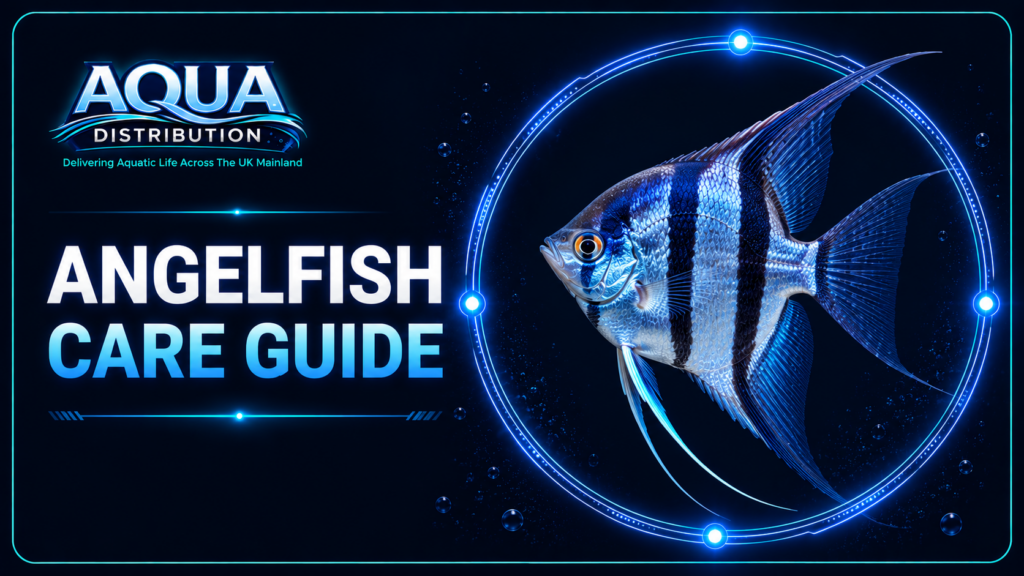
This complete Angelfish care guide covers everything you need to know to keep your fish healthy, active and thriving in a home aquarium. Learn how to create the ideal tank setup, maintain stable water parameters, choose the right food, understand feeding routines, select compatible tank mates and spot common health issues early. It also explains Angelfish behaviour, breeding habits and day-to-day care so you can provide a calm, spacious and suitable environment for these elegant freshwater fish.
Quick Facts
Angelfish at a Glance
A quick overview of the key care requirements for keeping Angelfish healthy, calm and thriving in a home aquarium.


Understanding Angelfish
Meet One of the Most Iconic Freshwater Fish
Angelfish (Pterophyllum scalare) are among the most recognisable tropical fish in the aquarium hobby. Native to the slow-moving rivers and floodplains of the Amazon Basin, their distinctive triangular shape and flowing fins make them a stunning centrepiece in community aquariums.
Despite their graceful appearance, Angelfish are actually members of the cichlid family. This means they are intelligent, curious and capable of displaying complex behaviours. While generally peaceful, mature adults can become territorial, particularly during breeding periods.
Modern Angelfish are available in a huge range of colours and patterns including Silver, Marble, Koi, Black, Zebra, Blue and Albino varieties. Selective breeding has also produced long-finned and veil forms that add even more elegance to the aquarium.
When provided with excellent water quality, suitable tank mates and a spacious aquarium, Angelfish can live for well over a decade and become one of the most rewarding freshwater species to keep.
Ideal Tank Setup
Creating the Perfect Angelfish Environment
Angelfish thrive in tall aquariums with gentle water movement, stable temperatures and plenty of vertical swimming space. Replicating their natural Amazonian habitat helps reduce stress and encourages natural behaviour.
Water Parameters
Stable, Warm and Clean Water
Angelfish prefer warm, stable tropical water with excellent filtration and regular maintenance. Sudden changes in temperature, pH or water quality can quickly cause stress.
Feeding & Diet
A Balanced Omnivore Diet
Angelfish are omnivores and do best on a varied diet of quality flakes, pellets, frozen foods and occasional live foods. Feed small amounts and avoid overfeeding.
Best Tank Mates
Compatible Companions for Angelfish
Angelfish are generally peaceful but can become territorial as they mature. Choose calm, similarly sized species that won’t nip fins or fit into an Angelfish’s mouth.
Plants & Decorations
Creating a Natural Amazon-Inspired Aquarium
Angelfish appreciate a well-structured aquarium with tall plants, natural wood and open swimming space. A balanced layout provides security while allowing these elegant fish to display their natural behaviour.
Common Mistakes
Avoid These Angelfish Care Problems
Most Angelfish problems come from cramped aquariums, unstable water quality or unsuitable tank mates. Avoiding these common mistakes keeps them healthier, calmer and more confident.
FAQ
Angelfish Care Questions
Quick answers to the most common Angelfish care questions, including tank size, behaviour, tank mates and beginner suitability.
Aquatic Academy
Ready to Keep Angelfish?
Angelfish combine beauty, intelligence and personality, making them one of the most rewarding tropical fish available. Provide a spacious aquarium, excellent water quality and carefully chosen tank mates, and they can thrive for many years as the centrepiece of your aquarium.