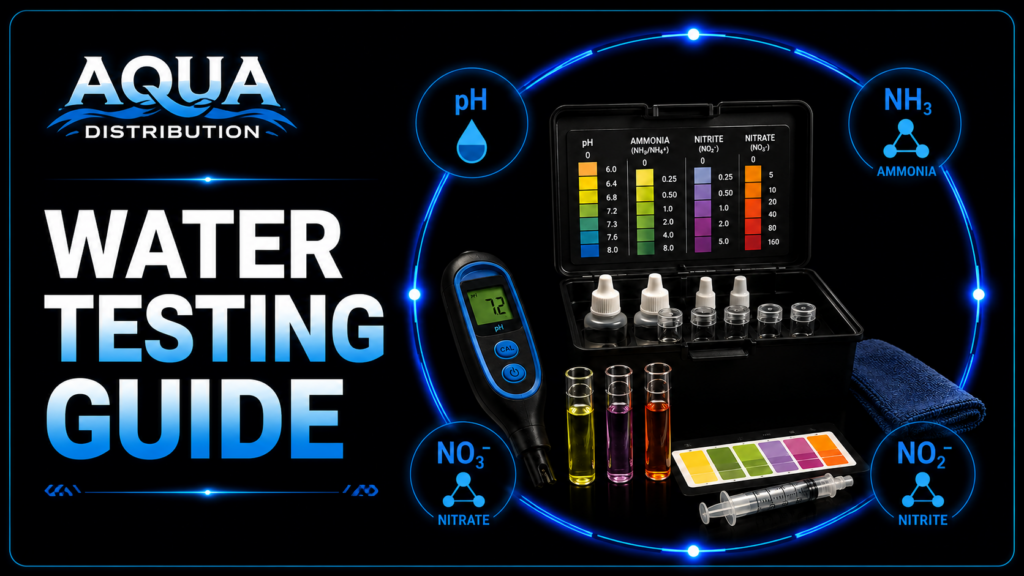
This complete aquarium water testing guide covers everything you need to know to maintain healthy, stable water conditions for your fish. Learn which water parameters to test, how often to test them, how to interpret your results and what action to take if something is out of balance. It also explains the importance of the nitrogen cycle, water changes and routine maintenance, helping you create a safe, thriving environment for all freshwater aquarium fish.
What Is Water Testing?
Water testing is the process of checking the quality and safety of your aquarium water. It allows you to measure important parameters that affect the health of your fish, plants, shrimp and beneficial bacteria.
Checks Water Quality
Aquarium water can look crystal clear while still containing harmful toxins. Water testing helps you see what is happening beneath the surface.
Measures Key Parameters
Test kits measure ammonia, nitrite, nitrate, pH and other important values that influence fish health and biological stability.
Protects Fish Health
Regular testing helps identify problems before fish become stressed, sick or exposed to dangerous water conditions.
Why Water Testing Matters
Many aquarium problems are caused by poor water quality rather than disease. Fish may show symptoms such as lethargy, gasping at the surface, loss of colour, poor appetite or unusual behaviour when water parameters become unsafe.
By testing your water regularly, you can identify problems early and take corrective action before they become serious.
Never assume water is safe just because it looks clean. Testing is the only reliable way to know what is happening inside your aquarium.
Why Water Testing Is Important
Water testing helps you spot hidden problems before they harm your fish. Most aquarium issues start in the water long before they become obvious.
Prevents Fish Stress
Poor water quality can make fish breathe faster, hide more, lose colour or stop eating. Testing helps you act early.
Finds Invisible Toxins
Ammonia and nitrite can be dangerous even when the tank looks clean. A test kit shows what your eyes cannot see.
Protects New Tanks
New aquariums are more unstable while beneficial bacteria are developing. Testing helps you track the cycle safely.
Guides Water Changes
Test results help you know when a water change is needed instead of guessing or changing too much at once.
Clear water does not always mean safe water.
Aquarium water can look perfect while still containing ammonia, nitrite or high nitrate. Regular testing gives you real information, not guesswork.
What Should You Test For?
The most important beginner aquarium tests are ammonia, nitrite, nitrate and pH. These give you a clear picture of how safe and stable your aquarium water is.
Ammonia
Ammonia comes from fish waste, uneaten food and decaying plant matter. It should always read 0 ppm in a safe aquarium.
Nitrite
Nitrite appears during the nitrogen cycle and can stop fish from using oxygen properly. It should also be 0 ppm.
Nitrate
Nitrate is less toxic than ammonia and nitrite, but high levels can still stress fish. Water changes help keep it under control.
pH
pH tells you how acidic or alkaline your water is. Most fish prefer a stable pH rather than sudden changes.
Extra Tests You May Need Later
As you gain experience, you may also test for KH, GH, chlorine, phosphate, copper or temperature depending on your aquarium type, livestock and water source.
Safe Water Test Results
These beginner-friendly targets help you understand whether your aquarium water is safe, unstable or needs attention.
Beginner Rule
The two most urgent results are ammonia and nitrite. If either one is above zero, treat it as a water quality warning and act quickly.
How Often Should You Test Aquarium Water?
How often you test depends on the age of your aquarium, how many fish you keep and whether the tank is stable. New aquariums need testing more often than mature tanks.
Every 1–2 Days
Test regularly while the aquarium is cycling. This helps you track ammonia, nitrite and nitrate as beneficial bacteria become established.
2–3 Times Per Week
New fish increase waste levels. Testing helps confirm that your filter bacteria can safely handle the extra load.
Once Per Week
A mature, healthy aquarium should still be checked weekly so you can catch slow changes before they become problems.
Daily
If fish look stressed, ammonia or nitrite is present, or water quality is unstable, test daily until results are safe again.
Simple Beginner Routine
For most beginners, a good habit is to test before a water change, after adding new fish and whenever fish behave differently. This gives you a clear record of what is happening in the aquarium.
How To Test Aquarium Water
Testing your aquarium water is simple once you understand the process. Follow these steps carefully to get accurate and reliable results.
Collect A Water Sample
Fill the test tube using aquarium water from the middle of the tank. Avoid taking water directly from the surface or substrate.
Add Test Reagents
Follow the instructions supplied with your test kit. Different tests require different numbers of drops or solutions.
Shake If Required
Some liquid tests require shaking the tube or reagent bottles. This helps the chemicals react correctly.
Wait For The Colour Change
Most tests need a short waiting period. Check the instructions and allow enough time for the reaction to complete.
Compare To The Colour Chart
Hold the tube against the supplied chart under good lighting and match the colour as closely as possible.
Record Your Results
Keeping a simple notebook or digital log helps you spot trends and identify changes before they become problems.
Pro Tip
Always test at roughly the same time of day. This makes results more consistent and easier to compare over time.
Common Water Testing Mistakes
Incorrect testing can lead to confusing results. These simple mistakes are easy to avoid once you know what to look for.
Common Mistakes
Testing too soon after adding chemicals, conditioner or medication.
Using expired test kits or old liquid reagents.
Reading the colour chart in poor lighting or against the wrong background.
Not shaking bottles or test tubes when the instructions say to.
Correct Actions
Wait until products have fully mixed before testing again.
Check expiry dates and replace test kits when results seem unreliable.
Read results in bright natural light or strong white room lighting.
Follow the test kit instructions exactly for each individual test.
Beginner Tip
If a result looks strange, test again before making big changes. One incorrect reading can cause unnecessary stress for both you and your fish.
What To Do If Your Results Are Unsafe
If your water test shows ammonia, nitrite or very high nitrate, act calmly and focus on improving water quality safely.
Do A Partial Water Change
Change around 25–50% of the aquarium water using dechlorinated water that is close to the tank temperature.
Stop Overfeeding
Uneaten food breaks down and creates more waste. Feed lightly until the water parameters return to safe levels.
Check The Filter
Make sure the filter is running properly. Never wash filter media under untreated tap water, as this can harm beneficial bacteria.
Test Again
Retest the aquarium water after the water change and continue checking daily until ammonia and nitrite are back to zero.
Important Warning
Do not add more fish while ammonia or nitrite is present. The aquarium needs time to stabilise before the biological filter can safely handle more waste.
Final Beginner Checklist
If you remember these key points, you’ll avoid most common water quality problems and give your fish the best chance of long-term success.
Test ammonia regularly and keep it at 0 ppm.
Test nitrite regularly and keep it at 0 ppm.
Control nitrate through routine maintenance and water changes.
Focus on keeping pH stable rather than constantly adjusting it.
Test more frequently in new aquariums than established tanks.
Always follow test kit instructions exactly.
Record your results so you can identify trends over time.
Never assume clear water automatically means safe water.
Remember The Golden Rule
Healthy aquariums are built on stable water quality. Regular testing allows you to spot problems early, make informed decisions and provide a safer environment for your fish.