
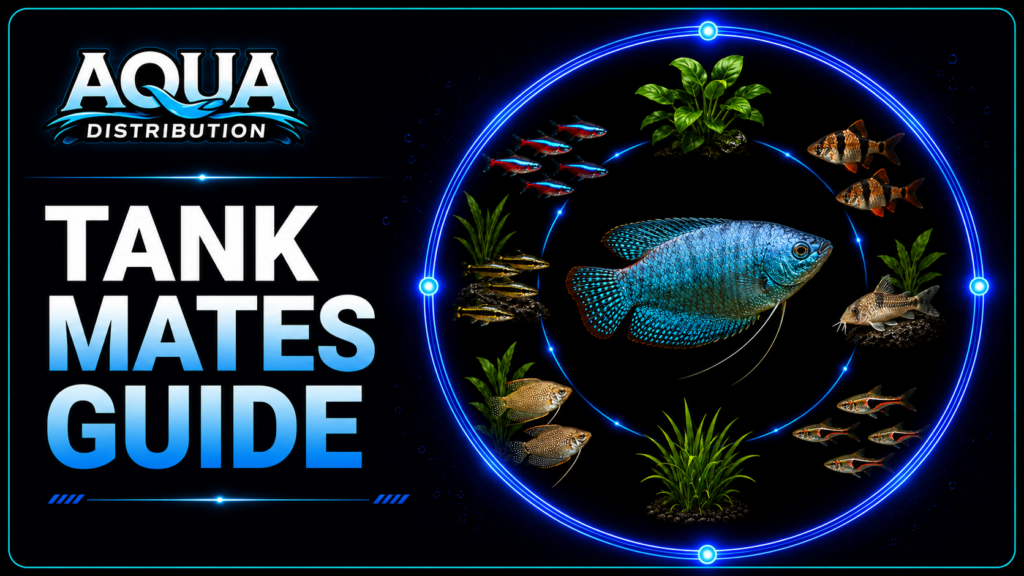
This aquarium tank mates guide covers everything you need to know about choosing compatible fish for a peaceful, healthy community aquarium. Learn which species live well together, how temperament, size and water requirements affect compatibility, and how to avoid common stocking mistakes. It also explains territorial behaviour, shoaling species, aquarium planning and stocking considerations, helping you create a balanced environment where your fish can live together safely and thrive.
What Are Tank Mates?
Tank mates are the fish, shrimp, snails or other aquatic animals that live together in the same aquarium.
Choosing tank mates is not just about picking fish that look nice together. Different species have different needs, behaviours and comfort levels. Some fish are peaceful, some are territorial, and some may see smaller fish or shrimp as food.
A good tank mate is an aquatic animal that can safely share the same space, water conditions and feeding routine without causing stress, injury or competition.
Why Compatibility Matters
Fish compatibility is one of the most important factors in creating a healthy and successful aquarium.
Even when water quality is perfect, incompatible fish can quickly cause problems. Stress, aggression, bullying, injuries and even deaths are often caused by poor compatibility rather than poor water conditions.
Every fish species has evolved to live in a particular environment and behave in a certain way. Some species naturally live in large peaceful groups, while others defend territories and prefer to live alone.
Understanding these natural behaviours helps aquarists build communities where fish feel secure, display natural behaviours and thrive for many years.
Stress
Constant chasing, bullying or overcrowding can weaken immune systems and make fish more vulnerable to disease.
Injuries
Fin nipping, fighting and territorial disputes can cause physical damage and long-term health issues.
Poor Feeding
Some species outcompete slower fish for food, resulting in malnutrition and poor growth.
Predation
Larger fish may naturally view smaller fish, shrimp or fry as a food source.
Key Factors When Choosing Tank Mates
The best tank mates are chosen by comparing more than just size. You also need to think about behaviour, water needs, feeding style and activity level.
A fish may look peaceful in a shop tank, but that does not always mean it will suit every aquarium. Some species need groups, some need space, some guard territories, and some become more aggressive as they mature.
Size
Fish should be similar enough in size that one cannot easily swallow or injure the other.
Temperament
Peaceful, semi-aggressive and aggressive fish should be matched very carefully.
Water Parameters
Tank mates should enjoy similar temperature, pH, hardness and water flow.
Diet
Fish with very different diets or feeding speeds can struggle in the same aquarium.
Activity Level
Very active fish can stress slow, shy or long-finned species.
Size
One of the most common compatibility mistakes is choosing tank mates based on their current size rather than their adult size.
Many aquarium fish sold in shops are juveniles and may only be a fraction of their eventual adult size. A fish that looks small and harmless today may become a large predator in the future.
As a general rule, if a fish can fit another fish into its mouth, there is always a risk it may eventually try to eat it. This is especially important when keeping predatory species, larger cichlids, catfish and monster fish.
Good Example
Adult Angelfish, Rainbowfish and Corydoras Catfish are generally similar enough in size that they can often coexist peacefully in a properly maintained community aquarium.
Poor Example
Large Oscars, Arowanas or Peacock Bass should never be expected to safely live long-term with small Tetras, Guppies or Nano Fish.
Temperament
Temperament describes how a fish behaves around other fish. Even species of similar size can be completely incompatible if their personalities and behaviours are very different.
Some fish spend their lives peacefully schooling together, while others naturally defend territories, compete for dominance or aggressively protect breeding sites. Understanding temperament is essential when building a successful aquarium community.
Most aquarium fish can be broadly grouped into three categories: peaceful, semi-aggressive and aggressive. Knowing which category your fish belongs to makes compatibility decisions much easier.
Peaceful Fish
These species generally coexist well with other non-aggressive fish and are ideal for community aquariums.
- Tetras
- Rasboras
- Corydoras
- Hatchetfish
- Most Rainbowfish
Semi-Aggressive Fish
These fish can be territorial or dominant but often live successfully with similarly sized tank mates.
- Angelfish
- Many Gouramis
- Some Cichlids
- Rainbow Cichlids
- Red Tail Sharks
Aggressive Fish
These species often require specialist stocking plans and careful compatibility research.
- Oscars
- Jaguar Cichlids
- Wolf Cichlids
- Peacock Bass
- Many Predatory Fish
Compatibility Warning
One aggressive fish can completely change the behaviour of an aquarium. Constant chasing and intimidation create stress that weakens immune systems and increases the risk of disease outbreaks.
Water Parameters
Tank mates should enjoy similar water conditions. Fish may look compatible, but they can still struggle if they need very different temperatures, pH or water hardness.
Every species has a preferred range where it feels comfortable. Keeping fish outside that range can cause long-term stress, poor colour, weak immunity and reduced lifespan.
For the best results, choose species that naturally suit the same type of aquarium, such as soft acidic water, harder alkaline water, cooler water or warmer tropical conditions.
Temperature
Choose fish that are comfortable in the same temperature range. A cool-water species may not suit a warm tropical setup.
pH Level
Some fish prefer acidic water, while others prefer alkaline water. Avoid mixing species with very different pH needs.
Water Hardness
Soft-water fish and hard-water fish may not thrive together long-term, even if they appear peaceful.
Water Flow
Fast river fish often enjoy stronger flow, while slow-moving species may become stressed in powerful currents.
Stable Water Is Just As Important
Compatibility is not only about matching numbers. Sudden changes in temperature, pH or hardness can stress fish quickly. Aim for stable, consistent water conditions rather than chasing perfect readings every day.
Diet
Tank mates should have feeding needs that work well together. Even peaceful fish can struggle if they are competing for the wrong type of food.
Some fish are surface feeders, some feed in the middle of the aquarium, and others search the bottom for food. A mixed community works best when every fish has fair access to suitable nutrition.
Problems often happen when fast, greedy fish outcompete slower species, or when predatory fish are kept with animals small enough to be seen as food.
Feeding Speed
Fast fish may eat most of the food before slower or shy species have a chance.
Food Type
Herbivores, omnivores and carnivores may need different foods to stay healthy.
Feeding Zone
Surface, mid-water and bottom feeders should all receive food in the right area.
Watch Your Fish During Feeding
Feeding time is one of the easiest ways to spot compatibility problems. If one fish is always chasing others away, stealing all the food or preventing shy fish from eating, the stocking plan may need adjusting.
Activity Level
Activity level means how much a fish moves, how quickly it swims and how confidently it uses the aquarium space.
Some fish are calm and slow-moving, while others are fast, energetic and constantly active. If these fish are mixed poorly, the more active species can stress quieter tank mates.
This is especially important with shy fish, long-finned fish, slow swimmers and species that need calm areas to feel secure.
Fast Swimmers
Active species such as Danios and some Barbs can make slow or shy fish feel unsettled.
Calm Fish
Fish such as Discus, Angelfish and Gouramis often prefer calmer tank mates and gentle movement.
Hiding Species
Loaches, catfish and shy species need quiet spaces, caves, plants or wood to retreat when needed.
Balance the Aquarium Space
A good community aquarium feels balanced. Some fish may use the surface, others the middle, and others the bottom. This reduces crowding and helps different species feel more comfortable.
Community Fish Examples
Community fish are generally peaceful species that can live successfully alongside a wide variety of compatible tank mates.
These fish are often recommended for beginner and intermediate aquarists because they are typically less territorial and easier to mix in a community aquarium. However, every species still has its own requirements for space, water quality and group size.
A well-planned community tank can create a colourful, active and natural-looking aquarium where multiple species occupy different areas of the tank.
Tetras
Schooling fish that thrive in groups and are excellent companions for many peaceful tropical species.
Rasboras
Calm and attractive fish that generally coexist well with other peaceful aquarium residents.
Corydoras Catfish
Friendly bottom dwellers that help create activity in lower areas of the aquarium.
Rainbowfish
Active but generally peaceful fish that add colour and movement to larger community aquariums.
Hatchetfish
Surface-dwelling fish that occupy a different area of the tank from many other community species.
Plecos & Ancistrus
Many smaller algae-eating species can work well in peaceful community aquariums when researched properly.
Semi-Aggressive Fish Examples
Semi-aggressive fish sit between peaceful community species and highly aggressive predators. They can often be kept successfully with tank mates, but compatibility requires more planning.
These fish may defend territories, establish dominance or become more protective during breeding periods. Many semi-aggressive species make excellent aquarium residents when housed with fish of similar size, confidence and temperament.
Problems usually occur when semi-aggressive fish are mixed with very shy species, slow-moving fish or fish small enough to be bullied.
Angelfish
Generally peaceful when young but can become territorial as they mature, especially during breeding.
Gouramis
Many species are calm but can show territorial behaviour towards similar-shaped fish.
Rainbow Cichlids
Often considered one of the more peaceful cichlids, but still capable of defending territory.
Blue Acaras
Attractive cichlids that are usually manageable in community setups with suitable companions.
Red Tail Sharks
Active fish that can become territorial towards similar-shaped bottom-dwelling species.
Severums
Large cichlids that are often calmer than many relatives but still require careful tank mate selection.
Aggressive & Predatory Fish Examples
Aggressive and predatory fish need careful planning because they may attack, bully or eat unsuitable tank mates.
These species are not always “bad” fish, but they usually need larger aquariums, stronger filtration and carefully chosen companions. Many are best kept with similar-sized, confident fish that cannot be swallowed.
Oscars
Large, intelligent cichlids that may eat small fish and can become territorial as they mature.
Jaguar Cichlids
Powerful predatory cichlids that require experienced care and carefully selected tank mates.
Peacock Bass
Fast-growing predators that need very large aquariums and should not be mixed with small fish.
Arowanas
Large surface predators that may view smaller fish as food and need spacious, secure aquariums.
Wolf Fish
Predatory species that are usually unsuitable for peaceful community aquariums.
Large Catfish
Many large catfish will eat fish small enough to fit in their mouth, especially at night.
Common Compatibility Mistakes
Many aquarium compatibility problems can be avoided by planning ahead and understanding the needs of each species before purchase.
The majority of aggression, stress and stocking issues occur because fish are selected based on appearance rather than research. Avoiding these common mistakes will dramatically increase your chances of building a successful aquarium community.
Ignoring Adult Size
Small juvenile fish can grow into large predators or territorial adults that no longer suit the aquarium.
Mixing Aggressive & Peaceful Fish
Peaceful fish often become stressed or injured when housed with aggressive species.
Overcrowding
Too many fish reduce territory, increase competition and place extra pressure on filtration.
Ignoring Water Requirements
Fish may survive outside their preferred conditions but rarely thrive long-term.
Not Researching Behaviour
Some species become territorial, aggressive or predatory as they mature.
Adding Fish Too Quickly
Rapid stocking can overwhelm biological filtration and increase stress within the aquarium.
Quick Reference Compatibility Chart
Use this simple chart as a starting point when comparing possible tank mates.
This chart is only a general guide. Always research the exact species before adding new fish, because behaviour can vary depending on tank size, age, group size and aquarium layout.
| Fish Type | Peaceful Community | Semi-Aggressive | Aggressive / Predatory |
|---|---|---|---|
| Peaceful Community Fish | Good Match | Use Caution | Avoid |
| Semi-Aggressive Fish | Use Caution | Often Suitable | Research First |
| Aggressive / Predatory Fish | Avoid | Research First | Expert Care |
| Shrimp & Nano Fish | Good With Care | High Risk | Avoid |
Tank Mate FAQ
Quick answers to common beginner questions about aquarium tank mates and fish compatibility.
Can any peaceful fish live together?
No. Peaceful fish still need similar water conditions, suitable tank size, compatible activity levels and enough space.
Can big fish live with small fish?
Only with extreme care. If a larger fish can fit a smaller fish in its mouth, the smaller fish may eventually be eaten.
Are shrimp safe with community fish?
Shrimp are safest with small peaceful species. Many larger fish may chase, stress or eat shrimp, especially baby shrimp.
How do I know if fish are incompatible?
Warning signs include chasing, hiding, damaged fins, fish not eating, rapid breathing, colour loss or one fish controlling the tank.
Should I add all tank mates at once?
No. Add fish gradually so your filter can adjust and so you can monitor behaviour before adding more livestock.
Aqua Distribution
Need Help Choosing Compatible Tank Mates?
Explore our carefully selected tropical fish, community species and specialist aquarium livestock to build a healthier, safer and more balanced aquarium.