This complete aquarium nitrogen cycle guide covers everything you need to know to establish and maintain a healthy biological filter. Learn how the nitrogen cycle works, why beneficial bacteria are essential, and how ammonia, nitrite and nitrate affect your fish. It also explains how to cycle a new aquarium, monitor water quality and avoid common mistakes, helping you create a stable, healthy environment where your freshwater fish can thrive.
What Is The Nitrogen Cycle?
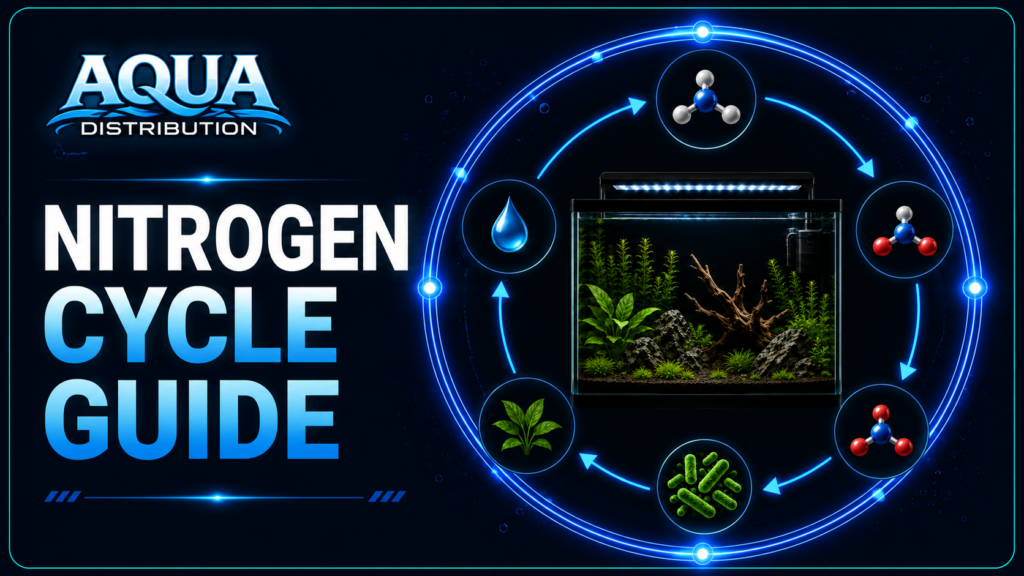
The nitrogen cycle is the natural process that turns harmful fish waste into safer compounds inside your aquarium. Without this process, ammonia can quickly build up and become dangerous for your fish.
In a healthy aquarium, beneficial bacteria grow inside the filter, substrate and surfaces of the tank. These bacteria convert ammonia into nitrite, then nitrite into nitrate.
Ammonia
Produced by fish waste, uneaten food and decaying organic matter.
Nitrite
Created when beneficial bacteria begin breaking down ammonia.
Nitrate
The safer end result, controlled through water changes and plants.
The 3 Main Stages
The nitrogen cycle happens in stages. Each stage changes one waste compound into the next, making the aquarium safer as the filter matures.
Ammonia
Fish waste, uneaten food and decaying plants release ammonia. This is highly toxic and should always test at zero in a safe aquarium.
Nitrite
Beneficial bacteria convert ammonia into nitrite. Nitrite is also dangerous and can stop fish from carrying oxygen properly.
Nitrate
A second group of bacteria converts nitrite into nitrate. Nitrate is much safer and is controlled with water changes and live plants.
How Long Does Cycling Take?
A new aquarium does not become biologically mature overnight. Beneficial bacteria need time to grow and establish themselves throughout the filter, substrate and aquarium surfaces.
Week 1
Ammonia begins to appear as waste is introduced. Beneficial bacteria are only just starting to colonise the aquarium.
Week 2
Ammonia levels often peak and begin falling as the first bacteria population develops.
Week 3
Nitrite levels rise as ammonia is processed. This stage is often the most frustrating part of the cycle.
Week 4+
Nitrite falls and nitrate becomes detectable. Once ammonia and nitrite consistently test at zero, the aquarium is cycled.
Fishless Cycling vs Fish-In Cycling
There are two main ways to cycle an aquarium. Fishless cycling is usually the safest method because it allows beneficial bacteria to grow before any fish are added.
Fishless Cycling
RecommendedThe aquarium is cycled before fish are added, using an ammonia source and regular water testing.
- Safer for fish
- Allows bacteria to establish first
- Easier to control ammonia levels
- Best choice for new aquariums
Fish-In Cycling
Use CautionFish are added while the filter is still maturing. This requires careful testing and frequent water changes.
- Higher risk of ammonia stress
- Requires daily water testing
- May need frequent water changes
- Should be done very carefully
Testing Your Water During The Cycle
Water testing is the easiest way to understand what is happening inside your aquarium. During the cycle, you should regularly test ammonia, nitrite and nitrate so you know when the filter is becoming mature.
Ammonia
Test regularly during the early stage. Ammonia should eventually drop to zero once the first bacteria colony develops.
Safe target: 0 ppmNitrite
Nitrite usually appears after ammonia starts falling. It should also return to zero before the tank is considered cycled.
Safe target: 0 ppmNitrate
Nitrate appears near the end of the cycle. It is much safer, but should still be controlled with water changes.
Keep low with water changesWhen Is The Aquarium Fully Cycled?
Your aquarium is considered cycled when the filter can process waste safely and your water tests show stable results over several days.
Your Tank Is Ready When:
Ammonia tests at 0 ppm
Nitrite tests at 0 ppm
Nitrate is present but controlled
Results stay stable for several days
Common Cycling Mistakes To Avoid
Most cycling problems happen because the beneficial bacteria colony is interrupted before it has fully established. Avoid these common mistakes to give your aquarium the best chance of success.
Adding Too Many Fish
Introducing too many fish at once can overwhelm the biological filter and cause dangerous ammonia spikes.
Replacing Filter Media
Most beneficial bacteria live inside your filter media. Replacing it completely can reset the cycle.
Over Cleaning
Washing filter media under tap water can kill beneficial bacteria due to chlorine and chloramine.
Skipping Water Tests
Water tests are the only reliable way to track cycling progress and identify problems early.
Overfeeding Fish
Excess food breaks down into ammonia and can rapidly destabilise a newly cycling aquarium.
Being Impatient
Cycling takes time. Rushing the process often leads to water quality problems and stressed fish.
Quick Reference Water Parameter Chart
Once your aquarium has completed the nitrogen cycle, maintaining stable water parameters becomes the key to long-term fish health and success.
| Parameter | Recommended Reading | Why It Matters |
|---|---|---|
| Ammonia (NH₃) | 0 ppm | Highly toxic to fish and should always remain at zero. |
| Nitrite (NO₂) | 0 ppm | Interferes with oxygen transport in fish. |
| Nitrate (NO₃) | Below 20–40 ppm | Controlled through water changes and plant growth. |
| pH | Species Dependent | Must remain stable and appropriate for the fish kept. |
| Temperature | Species Dependent | Supports healthy metabolism and immune function. |
Frequently Asked Questions
Below are some of the most common questions we receive about cycling an aquarium.