
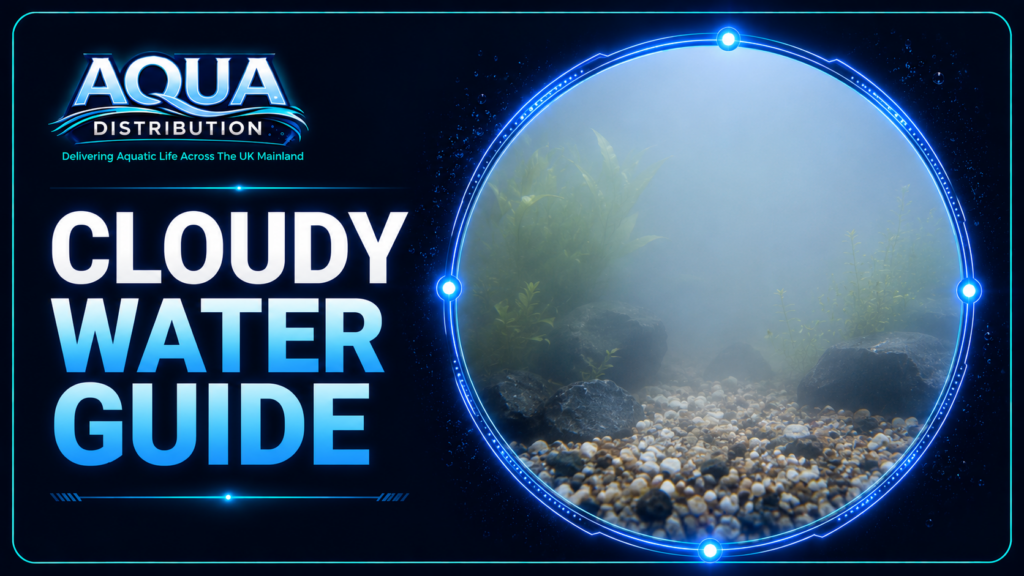
This complete cloudy water guide covers everything you need to know about identifying, preventing and fixing cloudy aquarium water. Learn the most common causes, including bacterial blooms, suspended particles, algae and water chemistry issues, along with the best solutions for each. It also explains how to prevent cloudy water through proper filtration, regular maintenance and good aquarium practices, helping you maintain crystal-clear water and a healthy environment for your fish.
Cloudy Water At A Glance
Cloudy water is one of the most common aquarium issues. While it is often harmless and temporary, it can sometimes indicate water quality problems that require immediate attention.
Cloudy Water Examples
Cloudy aquarium water can appear white, grey, green or hazy depending on the cause. These examples help identify what type of cloudiness you may be dealing with.

White Cloudy Water
Often linked to bacterial blooms in new or disturbed aquariums.

Green Cloudy Water
Usually caused by algae blooms from excess light or nutrients.

General Haze
Can come from overfeeding, poor filtration or particles in the water.
What Cloudy Aquarium Water Means
Cloudy water is not a disease itself. It is usually a sign that something in the aquarium has changed, such as bacteria, algae, waste, uneaten food or fine particles building up in the water.
Cloudy water is a symptom, not the main problem
In many aquariums, cloudy water appears after a new tank is set up, after a large clean, after overfeeding, or when the filter is struggling to keep up.
The most important step is to test the water before adding treatments. If ammonia or nitrite is present, the priority is protecting the fish rather than simply making the water look clear.
Clear water does not always mean safe water, and cloudy water does not always mean disaster. Always test first.
Why Aquarium Water Becomes Cloudy
Identifying the cause is the key to fixing cloudy water correctly. Most cases fall into one of the categories below.
Bacterial Bloom
Common in newly established aquariums. Beneficial bacteria multiply rapidly, creating a white or milky appearance.
Overfeeding
Excess food breaks down in the water, increasing waste levels and encouraging bacteria growth.
Poor Filtration
Dirty or undersized filters may struggle to remove fine particles and organic waste.
Algae Bloom
Green cloudy water is often caused by excess light, nutrient build-up or direct sunlight exposure.
Substrate Dust
New gravel, sand or decorative materials can release fine particles into the water if not rinsed properly.
Test These Values First
Before using treatments or making major changes, test your water. These parameters often reveal the true cause of cloudy water.
Ammonia
Ammonia should always be zero. Any detectable amount can stress or poison fish and may indicate the biological filter is struggling.
Nitrite
Nitrite is highly toxic and should also remain at zero. Elevated levels are common in cycling aquariums experiencing bacterial blooms.
Nitrate
High nitrate levels indicate accumulating waste and poor long-term water quality. Regular water changes help keep nitrates under control.
pH
Sudden pH swings can stress fish and disrupt beneficial bacteria. Consistency is often more important than chasing a specific number.
Temperature
Incorrect temperatures can affect fish health, oxygen levels and bacterial activity. Always keep temperatures appropriate for your livestock.
How To Clear Cloudy Aquarium Water
The safest solution depends on the cause. Start with testing, gentle maintenance and improved filtration before using chemical treatments.
Test The Water
Check ammonia, nitrite, nitrate, pH and temperature first. If ammonia or nitrite is present, treat it as a water quality emergency.
Reduce Feeding
Feed lightly for a few days and remove uneaten food. Overfeeding is one of the fastest ways to make cloudy water worse.
Partial Water Change
Carry out a sensible partial water change using dechlorinated water. Avoid huge sudden changes unless fish are in immediate danger.
Improve Filtration
Rinse mechanical media in removed tank water, check flow rate and add fine filter floss to help trap suspended particles.
Control Light
For green water, reduce lighting hours, avoid direct sunlight and manage nutrients with regular maintenance and water changes.
Signs Cloudy Water May Be Serious
Most cloudy water issues are harmless and temporary. However, certain symptoms can indicate poor water quality that requires immediate action.
Fish Gasping At The Surface
Fish gathering near the surface or breathing heavily may indicate low oxygen levels or dangerous ammonia and nitrite levels.
Ammonia Or Nitrite Detected
Any measurable ammonia or nitrite should be treated seriously. These toxins can quickly stress or kill aquarium fish.
Sudden Fish Deaths
If fish begin dying while the water is cloudy, immediately test water quality and check filtration equipment.
Strong Odours
Healthy aquariums should not smell foul. A strong rotten or sewage-like odour often points to excessive waste build-up.
No Improvement After Two Weeks
Persistent cloudiness may indicate an underlying filtration, stocking or maintenance issue that needs investigating.
How To Keep Aquarium Water Crystal Clear
Preventing cloudy water is usually easier than fixing it. Consistent maintenance and good aquarium habits will keep your tank healthy and looking its best.
Avoid Overfeeding
Feed only what your fish can consume within a few minutes. Remove excess food before it breaks down and pollutes the water.
Perform Regular Water Changes
Weekly partial water changes help remove waste, excess nutrients and dissolved organics before they become a problem.
Maintain Your Filter
Clean filter media using removed aquarium water and ensure the filter remains properly sized for the aquarium.
Avoid Overstocking
Too many fish create excess waste and place additional strain on filtration and biological stability.
Monitor Water Quality
Regular testing helps identify developing problems before fish show symptoms or water clarity begins to decline.
Cloudy Water Questions
Quick answers to common questions about cloudy aquarium water, what causes it and how to clear it safely.
Is cloudy aquarium water dangerous for fish?
Cloudy water is not always dangerous, but it can be a warning sign. Test ammonia and nitrite first. If either is above zero, take action immediately with a partial water change and improved aeration.
Why is my new aquarium cloudy?
New tanks commonly become cloudy due to bacterial blooms while the aquarium is establishing. This often clears naturally as the biological filter matures.
Should I do a water change for cloudy water?
A sensible partial water change can help, especially if waste levels are high. Avoid repeatedly changing huge amounts of water unless fish are in immediate danger.
Why is my aquarium water green and cloudy?
Green cloudy water is usually caused by free-floating algae. Reduce lighting hours, avoid direct sunlight and control nutrients with regular maintenance.
How long does cloudy water take to clear?
Many bacterial blooms clear within a few days to two weeks. If the water does not improve, check feeding, filtration, stocking levels and water parameters.
Clear Water Starts With Good Aquarium Care
Cloudy water is usually a sign that your aquarium needs testing, maintenance or a little time to stabilise. By checking water quality, avoiding overfeeding and keeping your filter healthy, most cloudy water problems can be safely corrected.
Shop Aquarium Essentials