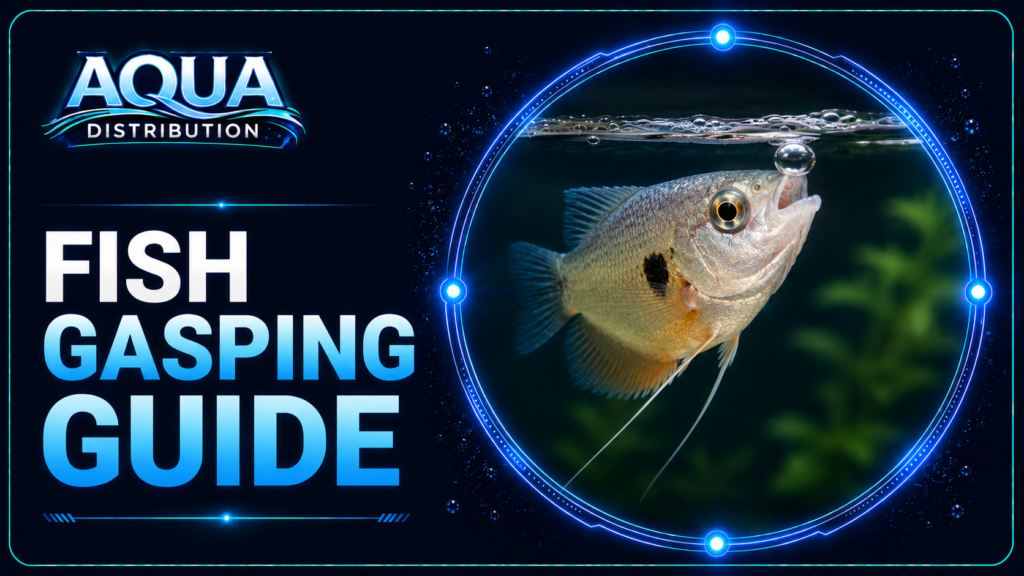
This complete fish gasping guide covers everything you need to know about why aquarium fish gasp at the surface and what it could mean for their health. Learn the most common causes, including low oxygen levels, poor water quality, ammonia or nitrite poisoning, high temperatures and disease, along with the steps you should take to resolve each issue. It also explains how to prevent gasping through proper filtration, water testing, aeration and regular maintenance, helping you maintain a safe, healthy environment where your fish can breathe and thrive.
Fish Gasping At The Surface
Gasping usually means your fish are struggling to get enough oxygen or are reacting to poor water conditions.
Act quickly, especially if several fish are gasping at once.
Poor surface movement can reduce oxygen exchange.
Add surface movement and check your filter is running properly.
Check ammonia, nitrite, nitrate, pH and temperature.
Why Do Fish Gasp At The Surface?
Gasping is usually a warning sign that your fish are struggling to breathe properly. In most cases, it is linked to oxygen levels, water quality, temperature, or stress inside the aquarium.
Fish Need Dissolved Oxygen
Fish absorb oxygen through their gills from the water. If oxygen levels drop too low, they may move to the surface where oxygen exchange is usually strongest.
Surface Gasping Is A Stress Signal
Occasional surface feeding is normal, but repeated mouth opening at the surface often means the fish is under respiratory stress.
Water Quality Can Affect Breathing
Ammonia, nitrite, poor filtration, overcrowding or sudden changes can irritate the gills and make it harder for fish to breathe.
Why Fish Start Gasping
Fish gasping is usually caused by something affecting oxygen levels, gill function, or overall water quality.
Low Oxygen Levels
Poor surface movement, warm water, overcrowding or weak filtration can reduce dissolved oxygen in the aquarium.
Ammonia Or Nitrite
Toxic water conditions can burn or irritate the gills, making it difficult for fish to breathe normally.
Poor Filtration
Blocked filters, dirty media or weak flow can reduce oxygen exchange and allow waste levels to rise.
Temperature Too High
Warm water holds less oxygen, so overheated tanks can quickly cause breathing stress.
Test These First
Whenever fish are gasping, testing the water should be your first priority. Poor water quality is one of the most common causes of respiratory stress in aquarium fish.
Ammonia
Ammonia should always be 0 ppm. Even small amounts can damage fish gills and make breathing difficult.
Nitrite
Nitrite should also remain at 0 ppm. Elevated levels reduce the blood’s ability to transport oxygen.
Temperature
Excessively warm water contains less dissolved oxygen. Check your heater and confirm temperatures remain appropriate for your species.
pH Stability
Sudden pH swings can stress fish and affect normal respiratory function. Stability is often more important than chasing exact numbers.
Nitrate Levels
High nitrate concentrations can contribute to long-term stress and poor health. Regular maintenance helps keep levels under control.
How To Help Gasping Fish
If your fish are gasping, act quickly. Improving oxygen levels and correcting water quality issues can often resolve the problem before it becomes life-threatening.
Increase Surface Movement
Point filter outlets towards the surface, add an air stone or increase flow to improve oxygen exchange immediately.
Perform A Water Change
A 25–50% water change can quickly reduce toxins and improve overall water quality when done correctly.
Test Water Parameters
Check ammonia, nitrite, nitrate, pH and temperature. Identify and correct any values outside the appropriate range.
Inspect Equipment
Ensure filters, pumps, air stones and heaters are functioning correctly and have not failed unexpectedly.
Reduce Stress Factors
Avoid overfeeding, overcrowding and sudden environmental changes while your fish recover.
Signs It Needs Urgent Attention
Fish gasping should always be taken seriously, especially when more than one fish is affected or symptoms appear suddenly.
Several Fish Are Gasping
If multiple fish are at the surface, it usually points to a tank-wide oxygen or water quality problem.
Rapid Gill Movement
Fast breathing, flared gills or repeated mouth opening can mean your fish are struggling to get enough oxygen.
Lethargy Or Weak Swimming
Fish that become weak, hover in one place or lose balance may be under serious stress.
Ammonia Or Nitrite Is Present
Any ammonia or nitrite reading above 0 ppm should be treated as urgent and corrected immediately.
How To Prevent Fish Gasping
Preventing gasping is mainly about keeping oxygen levels stable, maintaining good water quality and avoiding sudden stress in the aquarium.
Maintain Surface Movement
Keep gentle movement at the water surface so oxygen can enter the aquarium and carbon dioxide can escape.
Test Water Regularly
Check ammonia, nitrite, nitrate, pH and temperature often, especially in new tanks or heavily stocked aquariums.
Avoid Overcrowding
Too many fish can quickly reduce oxygen levels and increase waste, making breathing problems more likely.
Keep Filters Clean
Rinse filter media in old tank water during maintenance so flow stays strong without damaging beneficial bacteria.
Do Regular Water Changes
Consistent water changes help remove waste, stabilise conditions and keep the aquarium healthier long term.
Fish Gasping FAQ
Answers to some of the most common questions aquarium keepers ask when fish begin gasping at the surface.
Why are my fish gasping at the surface?
The most common causes are low oxygen levels, poor water quality, high ammonia, high nitrite, overheating or inadequate water movement.
Can low oxygen kill fish?
Yes. If oxygen levels fall too low, fish can become severely stressed and may eventually suffocate if conditions are not corrected.
Should I do a water change immediately?
If water quality is suspected, a partial water change is often one of the quickest ways to improve conditions while you investigate the cause.
Does warm water contain less oxygen?
Yes. As water temperature rises, its ability to hold dissolved oxygen decreases, which can contribute to gasping behaviour.
Can a filter help stop fish gasping?
A properly functioning filter improves circulation and surface agitation, helping maintain healthier oxygen levels throughout the aquarium.
Keep Your Fish Healthy & Breathing Normally
Fish gasping is often an early warning sign that something is wrong in the aquarium. By maintaining excellent water quality, proper filtration and stable oxygen levels, most causes can be prevented before they become serious.
If your fish are showing signs of respiratory distress, act quickly by testing your water, increasing aeration and correcting any issues you find. Early intervention can often save lives and restore your aquarium to full health.