Description
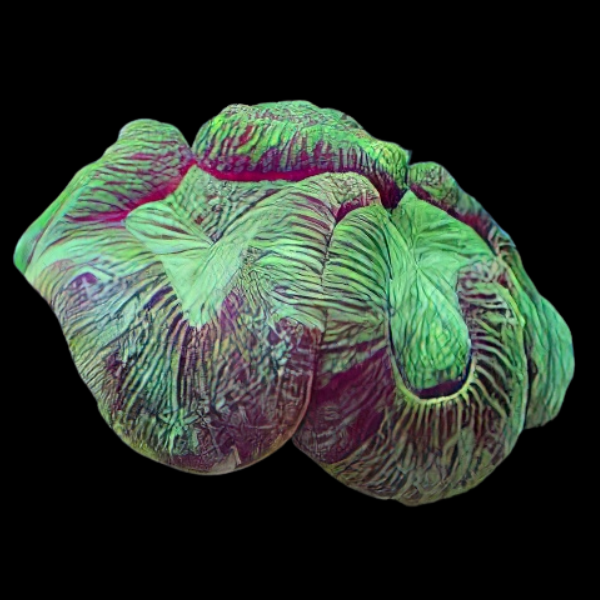
Brain Coral Sea (Trachyphyllia sp.)
(Also known as Open Brain Coral, Folded Brain Coral, or Green Trachy)
Overview
The Brain Coral (Trachyphyllia sp.) is one of the most recognisable and beautiful large-polyp stony (LPS) corals, admired for its vibrant colouration, fleshy texture, and distinctive folded or lobed appearance. Colours range from fluorescent green, red, and pink to metallic blue or multicolour combinations, often glowing intensely under actinic or blue LED lighting. This coral forms a single, large, fleshy polyp over a cup-shaped skeleton and is well-suited to peaceful reef aquariums. Hardy, photosynthetic, and easy to feed, Trachyphyllia is a rewarding centrepiece coral for aquarists of all experience levels.
Origin
Native to the Indo-Pacific region, including Fiji, Tonga, Indonesia, and the Great Barrier Reef. Typically found in sandy lagoons and lower reef slopes, often resting freely on the substrate or loosely attached to rubble.
Feeding
The Sea Brain Coral is photosynthetic, hosting symbiotic zooxanthellae that provide most of its nutritional needs. However, regular feeding enhances growth, colour, and polyp inflation. Offer 1–2 feedings per week of:
-
Mysis shrimp or finely chopped meaty foods
-
Marine snow or zooplankton blends
-
Specialized LPS coral foods
Feed at night or when feeder tentacles are visible — the coral responds quickly to food in the water.
Lighting
Moderate lighting. Prefers bright, indirect light but can adapt to higher or lower levels with proper acclimation.
-
PAR range: 100–200 µmol/m²/s
-
Avoid direct, intense light that may cause bleaching or tissue recession.
-
Strong blue lighting enhances its fluorescent colours.
Water Flow
Low to moderate, indirect flow. Gentle water movement is best — enough to keep the coral clean and provide oxygen exchange without disturbing its fleshy tissue. Strong flow may cause retraction or tissue damage.
Placement
-
Place directly on sandy substrate or a smooth, flat rock at the bottom of the tank.
-
Avoid sharp rocks or coarse gravel that can cut the coral’s soft tissue.
-
Leave 10–15 cm (4–6 inches) of space around it to prevent contact with other corals — Trachyphyllia extends short sweeper tentacles at night.
-
Do not place it on vertical rockwork; it may fall and suffer damage.
Tank Mates
Peaceful and reef safe. Suitable with:
-
All reef-safe fish (clownfish, gobies, blennies, tangs, etc.)
-
Reef-safe invertebrates (shrimp, snails, hermits, etc.)
-
Other LPS and soft corals placed at a safe distance
Avoid:
-
Aggressive corals (e.g., Euphyllia, Galaxea) with long sweeper tentacles
-
Large angelfish, butterflies, or puffers that may nip its tissue
Aggression
Mildly aggressive. Trachyphyllia can extend short sweeper tentacles at night and should not be placed too close to other corals. Generally non-confrontational but can be stung or damaged by aggressive neighbours.
Experience Level
Beginner to intermediate. Very hardy and adaptable under stable water conditions, making it ideal for both new and experienced reef aquarists. Responds well to feeding and consistent parameters.
Water Parameters
-
Temperature: 24–27°C (75–81°F)
-
pH: 8.1–8.4
-
Salinity: 1.024–1.026 SG
-
Hardness (dKH): 8–12
-
Calcium: 400–450 ppm
-
Magnesium: 1250–1350 ppm
-
Nitrate: <10 ppm
-
Tank Size: Minimum 75 gallons (280L) for stability and growth room
Regular water changes and trace element replenishment help maintain vivid colouration and strong skeletal health.
Reef Compatibility
Fully reef safe. Trachyphyllia is a peaceful, showy coral that adds movement and colour to mixed or LPS-dominated reefs. Best displayed on the sandbed under soft blue lighting, where it expands fully and shimmers with metallic hues.