Description
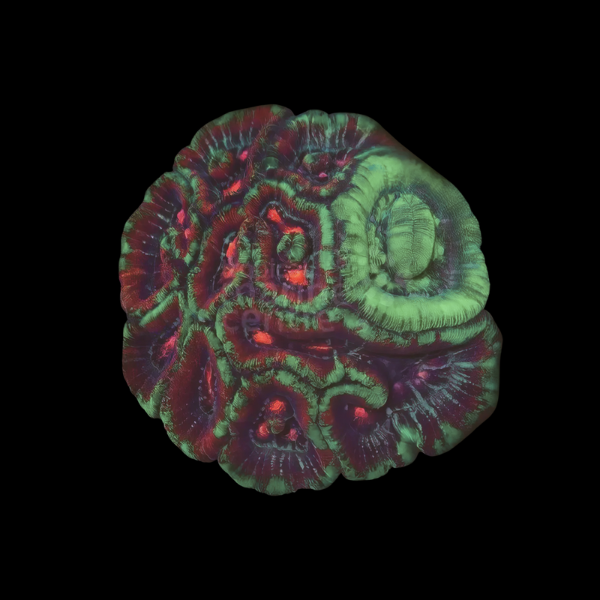
Closed Spiny Brain Hard Coral (Symphyllia sp.)
(Also known as Closed Brain Coral, Spiny Brain Coral, or Dented Brain Coral)
Overview
The Closed Spiny Brain Coral (Symphyllia sp.) is a beautifully sculpted large-polyp stony (LPS) coral, prized for its deep valleys, fleshy ridges, and intricate brain-like patterns. Colonies are often circular or folded, with colours ranging from green, red, and orange to purple and metallic hues, frequently featuring fluorescent streaks under actinic or blue LED lighting. Symphyllia corals are photosynthetic, hardy, and moderately aggressive, making them ideal showpieces for mature reef aquariums.
Origin
Native to the Indo-Pacific region, including Fiji, Tonga, Indonesia, and the Great Barrier Reef. Found on lower reef slopes and lagoonal areas where water movement is gentle and light levels are moderate.
Feeding
The Closed Spiny Brain Coral is photosynthetic, housing symbiotic zooxanthellae for primary nutrition. However, supplemental feeding enhances colouration, polyp extension, and growth. Offer 1–2 feedings per week of:
-
Mysis shrimp, brine shrimp, or finely chopped seafood
-
Marine snow or zooplankton blends
-
Specialised LPS coral foods
Feed at night or during low light when feeder tentacles are extended.
Lighting
Moderate lighting preferred. Provide bright, indirect light from LED, T5, or metal halide systems.
-
PAR range: 100–200 µmol/m²/s
-
Acclimate slowly to intense lighting to avoid bleaching.
-
Blue-spectrum lighting enhances fluorescence and pattern definition.
Water Flow
Low to moderate, indirect flow. Gentle currents prevent detritus buildup and promote gas exchange without irritating or tearing the coral’s fleshy tissue. Avoid strong, direct jets that can cause tissue damage or retraction.
Placement
-
Place on the sandy substrate or lower rockwork, away from sharp edges or coarse gravel.
-
Ensure the coral rests securely and does not rub against hard surfaces.
-
Allow 10–15 cm (4–6 inches) of space around it to prevent stings or tissue contact with other corals.
Tank Mates
Reef safe with caution. Compatible with:
-
All reef-safe fish (clownfish, gobies, tangs, blennies, etc.)
-
Invertebrates such as shrimp, snails, and hermit crabs
-
Other LPS and soft corals placed at a safe distance
Avoid:
-
Aggressive stinging corals (e.g. Galaxea, Hydnophora) nearby
-
Large angelfish or butterflyfish that may nip at fleshy tissue
Aggression
Moderately aggressive. Symphyllia can extend short sweeper tentacles at night and produce allelopathic chemicals to defend territory. Always maintain spacing from neighbouring corals to avoid damage.
Experience Level
Intermediate. While generally hardy, Symphyllia requires stable water chemistry and thoughtful placement to maintain tissue health and prevent aggression issues. Suitable for aquarists with basic LPS experience.
Water Parameters
-
Temperature: 24–27°C (75–81°F)
-
pH: 8.1–8.4
-
Salinity: 1.024–1.026 SG
-
Hardness (dKH): 8–12
-
Calcium: 400–450 ppm
-
Magnesium: 1250–1350 ppm
-
Nitrate: <10 ppm
-
Tank Size: Minimum 75 gallons (280L) for stable conditions and adequate spacing
Regular water changes and trace element supplementation support skeletal growth and colour intensity.
Reef Compatibility
Reef safe with caution. The Closed Spiny Brain Coral is a spectacular, fleshy LPS coral suited for peaceful mixed reefs. Its bold structure and bright colours make it a visual centrepiece on the sandbed, but careful spacing and moderate flow are essential to prevent damage or aggression.