Description
Elephant Skin Hard Coral (Pachyseris sp.)
(Also known as Elephant Skin Coral, Corduroy Coral, or Ridge Coral)
Overview
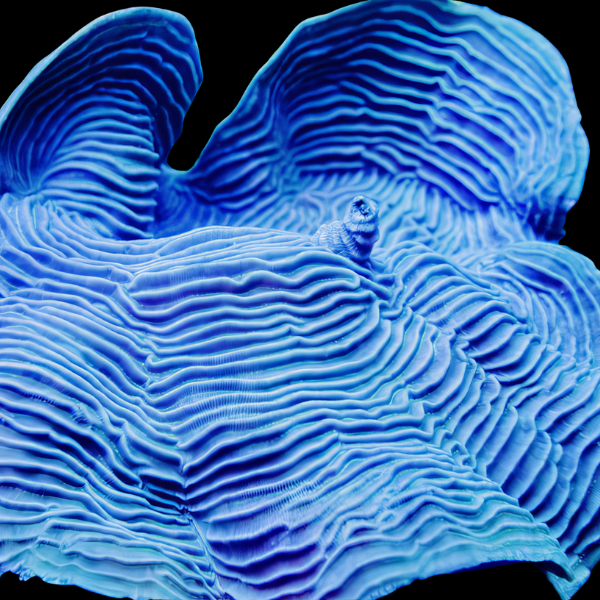
The Elephant Skin Coral (Pachyseris sp.) is a unique and visually intriguing small-polyp stony (SPS) coral, named for its distinctive ridged and folded surface texture that closely resembles the wrinkled skin of an elephant. Colonies grow in thin, encrusting, or plating layers with a rippled pattern and subtle colour variations of brown, green, grey, or blue, often with fluorescent edges under actinic lighting. This coral adds texture and structural complexity to reef aquariums and is relatively hardy for an SPS species, provided stable conditions are maintained.
Origin
Native to the Coral Sea, Great Barrier Reef, Fiji, Tonga, and throughout the Indo-Pacific region. Found on reef slopes and walls, usually in areas with moderate light and strong, variable water movement.
Feeding
The Elephant Skin Coral is photosynthetic, hosting symbiotic zooxanthellae that provide most of its nutrition through photosynthesis. While it does not require direct feeding, supplemental nutrition can enhance growth and colour. Offer occasional feedings of:
-
Marine snow or coral plankton blends
-
Phytoplankton or powdered SPS coral foods
-
Dissolved amino acid and trace element supplements
Lighting
Moderate to high lighting. Provide bright, full-spectrum illumination using LED, T5, or metal halide systems.
-
PAR range: 150–300 µmol/m²/s
-
Too little light leads to dull coloration and slower growth.
-
Blue-spectrum light enhances the coral’s subtle fluorescent sheen and ridge highlights.
Water Flow
Moderate to strong, turbulent flow. Pachyseris thrives in dynamic water movement that keeps the surface free of debris and ensures proper gas exchange. Avoid laminar, one-directional currents that can cause uneven growth.
Placement
-
Position on mid to upper rockwork, where it can receive bright light and consistent flow.
-
Allow space for lateral spreading — colonies encrust and expand across rock surfaces.
-
Avoid placement in shaded or low-flow areas, as detritus accumulation can irritate the coral’s tissue.
Tank Mates
Reef safe. Compatible with:
-
All reef-safe fish (tangs, wrasses, gobies, blennies, clownfish, etc.)
-
Peaceful invertebrates (snails, shrimp, hermit crabs)
-
Other SPS or peaceful LPS corals
Avoid:
-
Aggressive stinging corals (e.g., Galaxea, Hydnophora) in close proximity
-
Butterflyfish or angelfish that may nip its tissue
Aggression
Peaceful. Pachyseris does not have long sweeper tentacles but can be damaged by nearby aggressive corals. Maintain several centimetres of spacing between colonies to prevent competition or shading.
Experience Level
Intermediate. While more forgiving than many SPS corals, Pachyseris requires stable water parameters, good flow, and moderate lighting. Ideal for aquarists looking to transition from LPS to SPS corals.
Water Parameters
-
Temperature: 24–27°C (75–81°F)
-
pH: 8.1–8.4
-
Salinity: 1.024–1.026 SG
-
Hardness (dKH): 8–12
-
Calcium: 400–450 ppm
-
Magnesium: 1250–1350 ppm
-
Nitrate: <5 ppm
-
Phosphate: <0.03 ppm
-
Tank Size: Minimum 100 gallons (380L) for stability and consistent flow zones
Maintaining excellent water quality and strong, variable circulation is key to vibrant colouration and healthy skeletal growth.
Reef Compatibility
Fully reef safe. The Elephant Skin Coral adds a fascinating textural contrast to reef aquariums, complementing branching and plating SPS corals. Its rippled ridges, subtle fluorescence, and encrusting growth make it an excellent background or mid-rock feature coral in mature reef systems.