Description
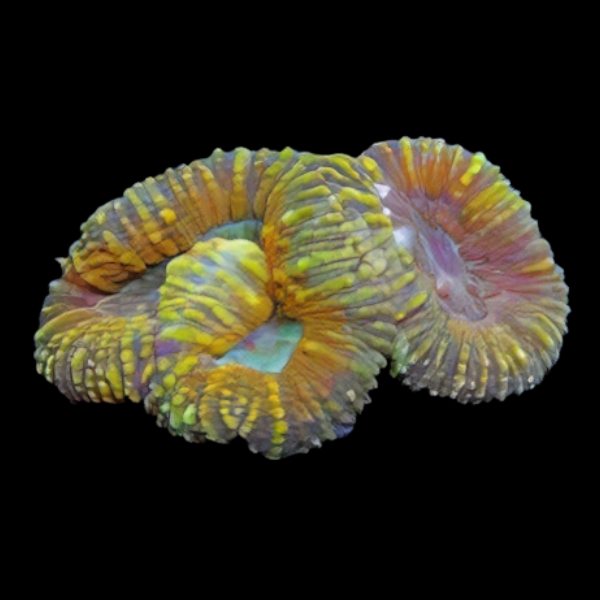
Spiny Brain Coral (Cultured Hard Coral) (Lobophyllia sp.)
(Also known as Lobed Brain Coral, Meat Coral, or Open Brain Coral)
Overview
The Spiny Brain Coral (Lobophyllia sp.) is a striking and fleshy large-polyp stony (LPS) coral, easily recognised by its bold lobed structure and vibrant, swirling colour patterns. Cultured specimens display brilliant combinations of red, orange, green, purple, and metallic blue, often with iridescent highlights under actinic lighting. Its “spiny” name comes from the visible ridges and skeletal valleys that give the coral a textured, sculpted appearance. Hardy, adaptable, and long-lived, Lobophyllia is a favourite among reef keepers for its dramatic form, peaceful nature, and excellent aquaculture success.
Origin
Cultured from Indo-Pacific broodstock, originally native to regions including the Great Barrier Reef, Coral Sea, Fiji, Tonga, and Indonesia. In the wild, Lobophyllia inhabits protected reef slopes, lagoons, and lower reef zones, where light and flow are moderate.
Feeding
The Spiny Brain Coral is photosynthetic, relying primarily on zooxanthellae for energy. Supplemental feeding encourages faster growth and more intense colouration. Feed 1–2 times per week with:
-
Mysis shrimp or enriched brine shrimp
-
Marine plankton or LPS coral foods
-
Finely chopped seafood or coral pellets
Feed at dusk or under low flow, when feeding tentacles are extended.
Lighting
Moderate lighting. Provide bright, indirect illumination from LED, T5, or hybrid systems.
-
PAR range: 100–200 µmol/m²/s
-
Acclimate slowly to higher light levels to avoid tissue bleaching.
-
Blue and violet spectrums enhance the coral’s natural fluorescence and colour contrast.
Water Flow
Low to moderate, indirect flow. Gentle, alternating currents allow full polyp expansion while preventing detritus buildup. Avoid strong, direct flow, which can damage the coral’s delicate tissue or cause retraction.
Placement
-
Place on the substrate or lower rockwork where it receives moderate light and steady, indirect flow.
-
Allow 10–15 cm (4–6 inches) of space from neighbouring corals, as Lobophyllia can extend short sweeper tentacles at night.
-
Ensure stable placement, as colonies can be heavy and may shift over time.
Tank Mates
Reef safe with caution. Compatible with:
-
Peaceful reef fish (clownfish, gobies, tangs, wrasses, blennies, etc.)
-
Invertebrates such as shrimp, snails, and small hermit crabs
-
Other peaceful LPS and soft corals with adequate spacing
Avoid:
-
Aggressive corals (e.g., Galaxea, Hydnophora, Euphyllia)
-
Butterflyfish and large angelfish that may nip the coral’s fleshy tissue
Aggression
Moderate. Lobophyllia can extend short stinging tentacles during the night to defend its territory. Maintain spacing and steady water flow to minimise contact with other species.
Experience Level
Beginner to intermediate. The Spiny Brain Coral is hardy and adaptable, suitable for aquarists of all experience levels. It tolerates a variety of light and flow conditions, provided water chemistry remains stable.
Water Parameters
-
Temperature: 24–27°C (75–81°F)
-
pH: 8.1–8.4
-
Salinity: 1.024–1.026 SG
-
Alkalinity (dKH): 8–12
-
Calcium: 400–450 ppm
-
Magnesium: 1250–1350 ppm
-
Nitrate: <10 ppm
-
Phosphate: <0.03 ppm
-
Tank Size: Minimum 100 litres (25 gallons); larger systems preferred for growth and spacing
Stable calcium and alkalinity levels are essential for skeletal development and maintaining its vivid, cultured coloration.
Reef Compatibility
Fully reef safe. The Spiny Brain Coral is a showpiece LPS that adds rich colour, texture, and movement to reef aquariums. Cultured varieties are especially hardy and sustainable, making them an environmentally friendly and visually rewarding addition to mixed or LPS-dominant systems.