
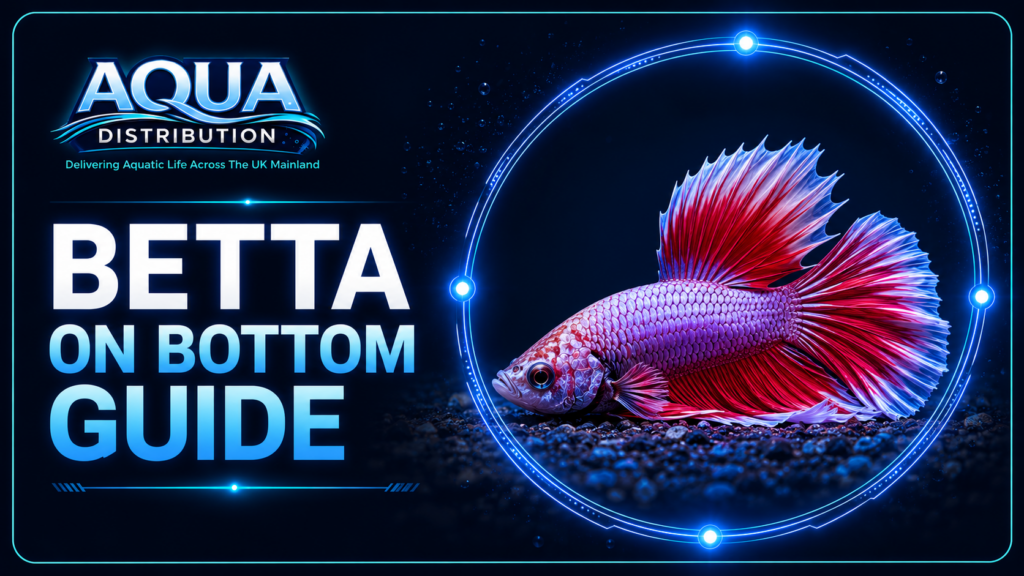
This complete Betta fish sitting on the bottom guide covers everything you need to know about why your Betta may be resting more than usual and when it could be a sign of an underlying problem. Learn the most common causes, including stress, poor water quality, incorrect water temperature, swim bladder issues, illness and ageing, along with the best ways to diagnose and address each one. It also explains when resting is normal, when to seek treatment and how to prevent future health issues, helping you keep your Betta healthy, comfortable and active.
Why Is My Betta Sitting At The Bottom?
Bottom sitting can be normal resting behaviour, but it can also be an early warning sign of stress, poor water quality, illness, or old age.
Why Do Betta Fish Sit On The Bottom?
Bettas naturally rest throughout the day, and sitting near the bottom of the tank is not always a problem. They may pause on the substrate, rest against décor, or settle on broad plant leaves when they feel calm and secure.
The important part is looking at the full behaviour. A betta that still swims normally, eats well, reacts to you, and has bright colour is usually far less concerning than a betta that is clamped, gasping, faded, bloated, or refusing food.
Always check water quality, temperature, appetite, breathing, and body condition before deciding what action to take.
Common Reasons Bettas Sit On The Bottom
These are the most common reasons a betta may spend more time resting low in the tank.
Poor Water Quality
Ammonia, nitrite, or high nitrate can make a betta weak, stressed, or lethargic.
Low Temperature
Cold water slows metabolism and can make bettas sit still near the bottom.
Stress
Strong flow, bright lighting, bullying tank mates, or sudden changes can cause hiding and bottom sitting.
Illness
Swim bladder problems, infections, parasites, or fin damage can reduce activity.
Water Parameters To Check First
Water quality issues are one of the most common reasons for lethargy and bottom sitting. Test the aquarium and compare your results against the recommended ranges below.
25–28°C
Bettas are tropical fish and require consistently warm water. Temperatures below this range can reduce activity and appetite.
0 ppm
Any detectable ammonia is harmful and can quickly stress or poison a betta.
0 ppm
Nitrite interferes with oxygen transport and should always remain at zero.
Below 20 ppm
Elevated nitrate levels can lead to chronic stress and poor health over time.
How To Help A Betta Sitting On The Bottom
The correct treatment depends on the cause. Start with the basics first, as many cases are resolved by improving water quality and reducing stress.
Test The Water
Check ammonia, nitrite, nitrate and temperature immediately. Poor water quality is often the root cause of lethargy.
Perform A Water Change
If parameters are poor, carry out a partial water change using dechlorinated water of a similar temperature.
Reduce Stress
Ensure gentle water flow, provide hiding places, dim excessive lighting, and remove any aggressive tank mates.
Monitor Closely
Watch for changes in appetite, breathing, swimming ability, bloating, or external signs of disease over the next few days.
Warning Signs That Need Attention
Bottom sitting becomes more concerning when it appears with other symptoms. These signs usually mean your betta needs closer care and quick action.
Not Eating
Refusing food for more than a day can suggest stress, illness, poor water quality, or temperature problems.
Gasping Or Heavy Breathing
Rapid gill movement, gasping at the surface, or laboured breathing can indicate poor water quality or low oxygen.
Clamped Fins
Fins held tight against the body are a common sign that your betta is stressed, weak, or unwell.
Bloating Or Loss Of Balance
Swelling, floating sideways, sinking, or struggling to swim may point to swim bladder issues or internal problems.
How To Prevent Bottom Sitting Problems
While occasional resting is perfectly normal, maintaining a stable environment can greatly reduce the risk of stress, illness, and lethargic behaviour.
Maintain Stable Water Quality
Test water regularly and perform routine water changes to keep ammonia and nitrite at zero and nitrate low.
Keep Water Warm
Use a reliable heater and maintain a temperature between 25–28°C for optimal health and activity.
Provide Resting Areas
Broad-leaf plants, caves, and gentle décor allow bettas to rest comfortably without stress.
Avoid Stress
Minimise sudden changes, strong currents, aggressive tank mates, and excessive handling.
Frequently Asked Questions
Quick answers to some of the most common questions about bettas sitting on the bottom of the aquarium.
Is it normal for a betta fish to sit on the bottom?
Yes. Bettas often rest during the day and may sit on the substrate, décor, or plant leaves. If they are still eating, swimming normally, and showing good colour, this behaviour can be completely normal.
How do I know if my betta is sick?
Look for additional symptoms such as loss of appetite, clamped fins, bloating, heavy breathing, faded colour, or difficulty swimming. These signs are usually more concerning than bottom sitting alone.
Can cold water make a betta sit on the bottom?
Absolutely. Bettas are tropical fish and become sluggish when temperatures drop below their preferred range. Keeping water between 25–28°C helps maintain normal activity levels.
Should I perform a water change?
If water tests show ammonia, nitrite, or elevated nitrate levels, a partial water change is usually one of the first steps to improving conditions and reducing stress.
When should I seek further help?
If your betta stops eating, struggles to swim, develops swelling, gasps for air, or continues to deteriorate despite correcting water quality, further investigation and treatment may be required.
Keep Your Betta Healthy, Active & Comfortable
A betta sitting on the bottom is not always a sign of illness, but it should never be ignored. Check water quality, temperature, behaviour, appetite, and breathing so you can quickly tell the difference between normal resting and a real health concern.