
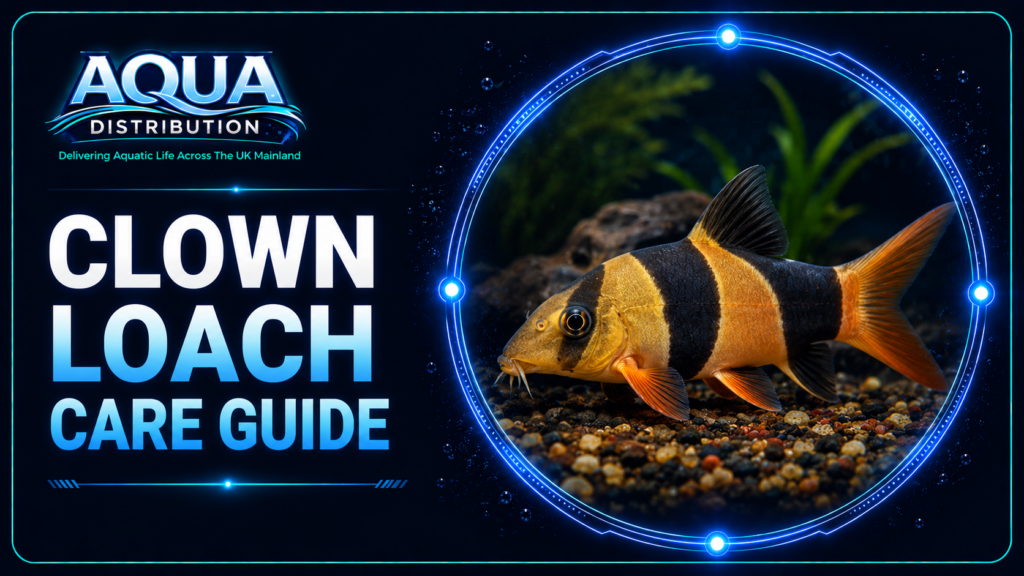
This complete Clown Loach care guide covers everything you need to know to keep your fish healthy, active and thriving in a home aquarium. Learn how to create the ideal tank setup, maintain stable water parameters, choose the right food, understand feeding routines, select compatible tank mates and recognise common health issues early. It also explains Clown Loach behaviour, social requirements, growth expectations and long-term care, helping you provide a spacious, well-maintained environment where these playful and highly social freshwater fish can flourish.
Quick Facts
Clown Loach Overview
A peaceful, social bottom-dwelling fish best suited to spacious aquariums with stable water, hiding places and a proper group.
Understanding Clown Loaches
Why Clown Loaches Are One Of The Most Popular Bottom-Dwellers
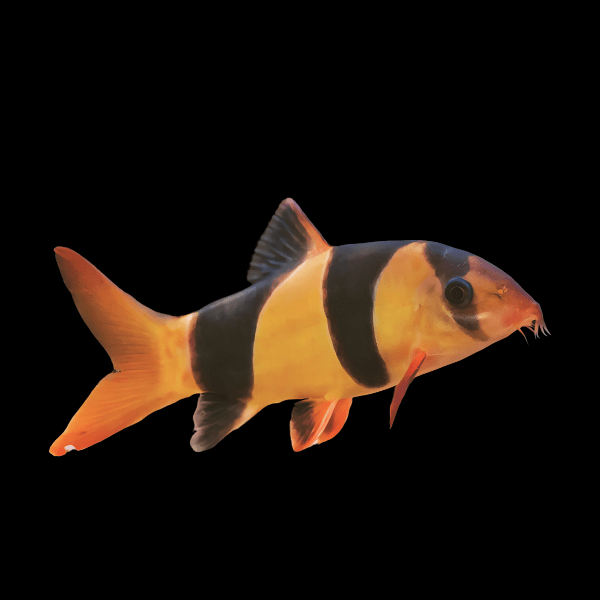
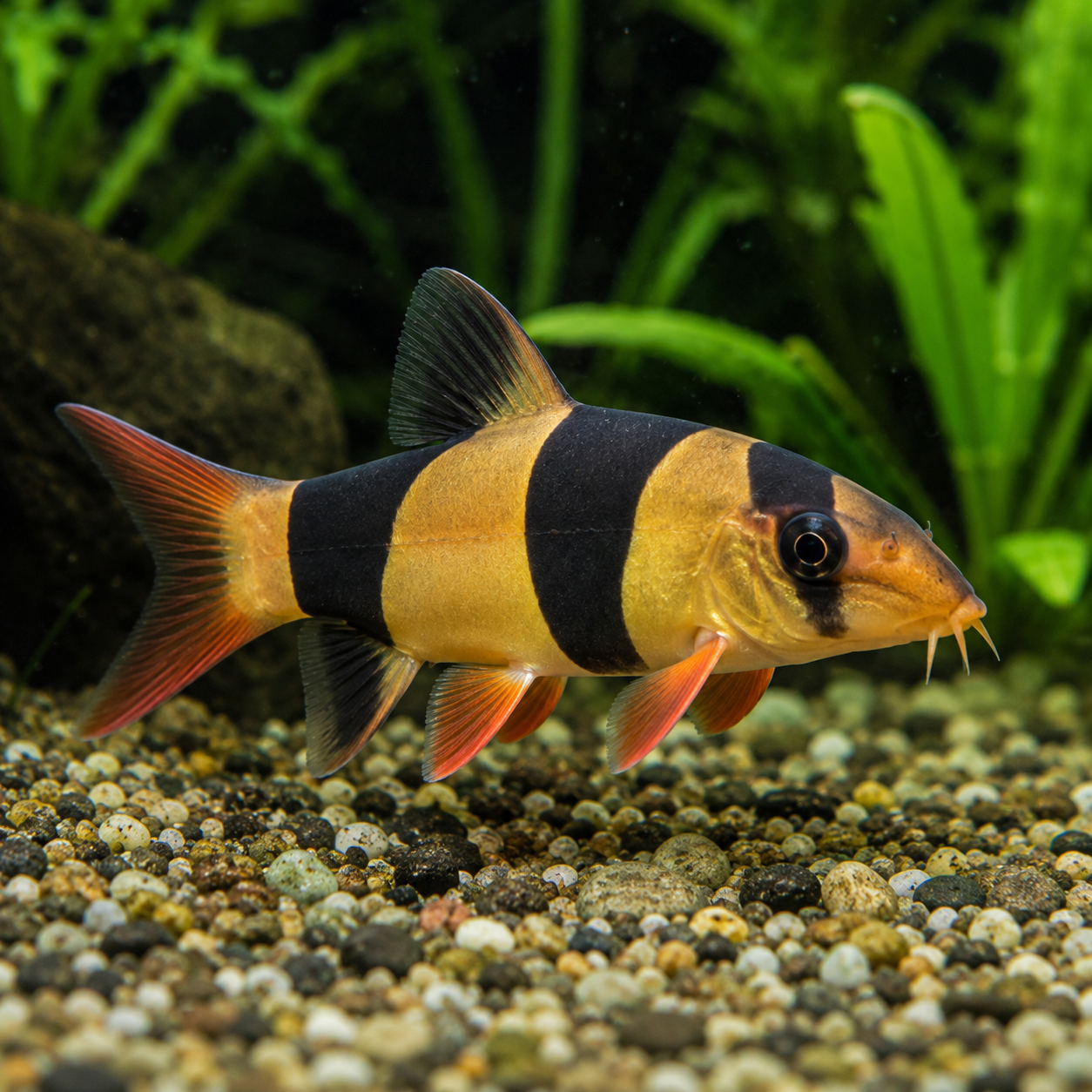
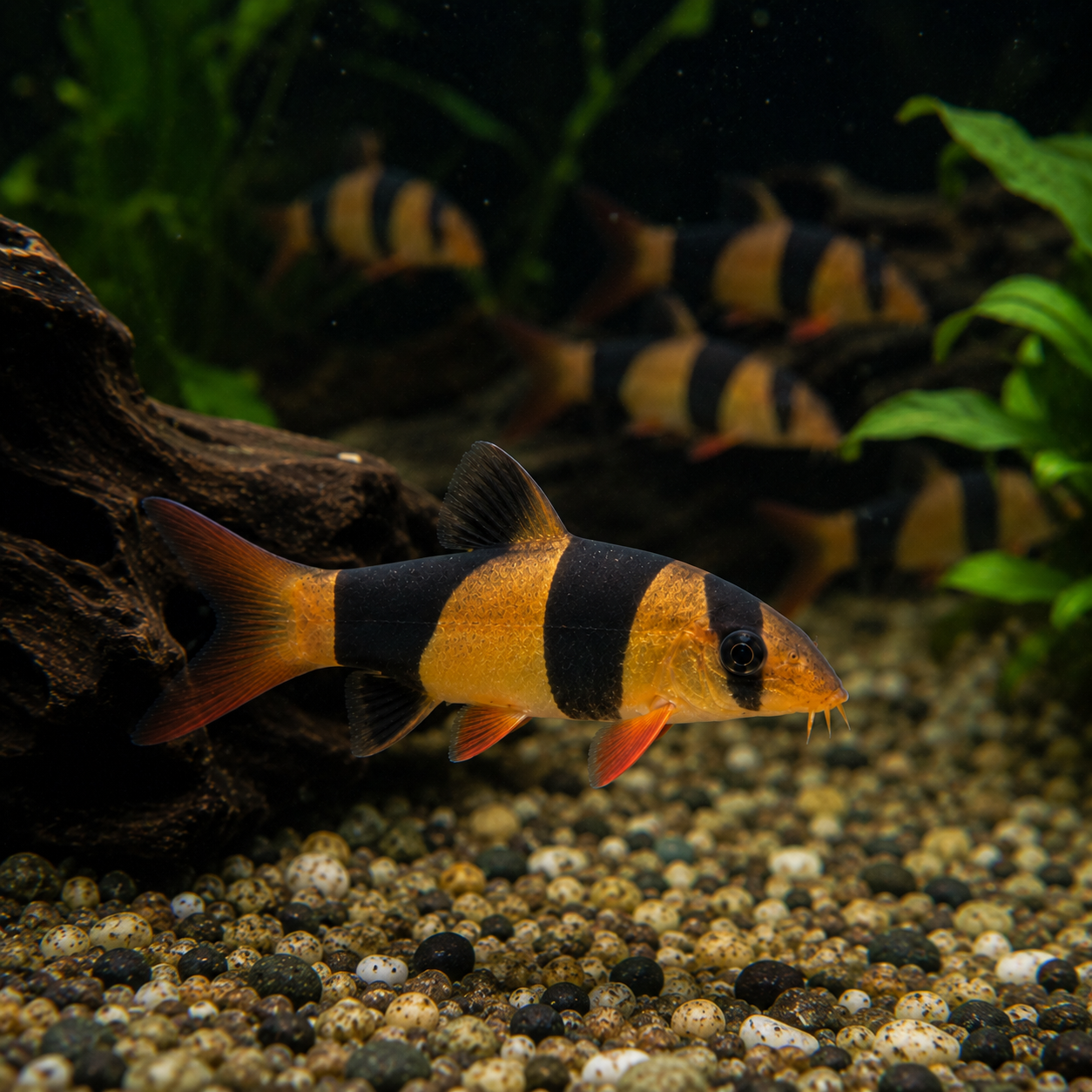
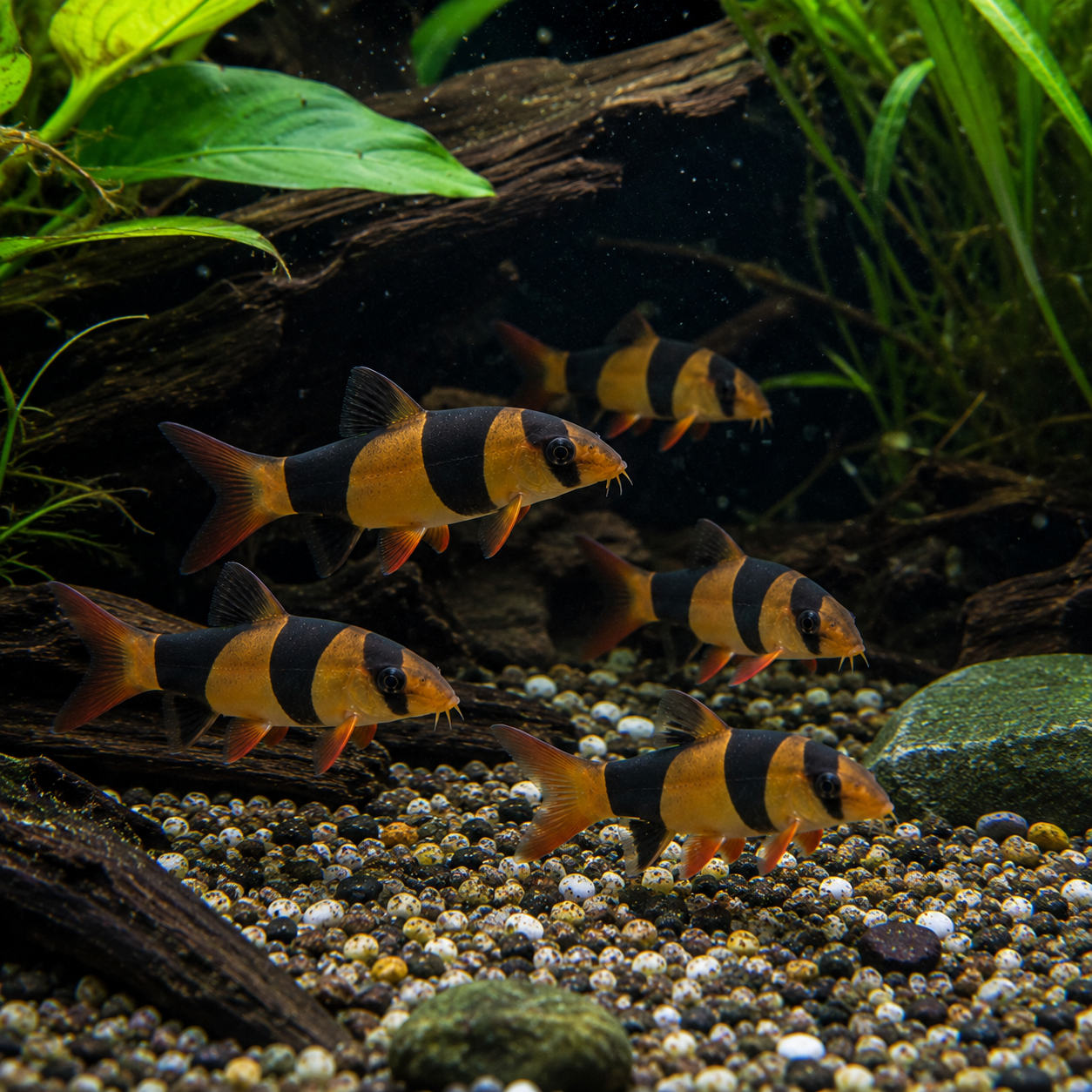
Clown Loaches (Chromobotia macracanthus) are among the most recognisable freshwater fish in the aquarium hobby thanks to their vibrant orange colouring, bold black bands and playful personalities. Native to Indonesia, these social fish thrive when kept in groups and quickly become a favourite among aquarists.
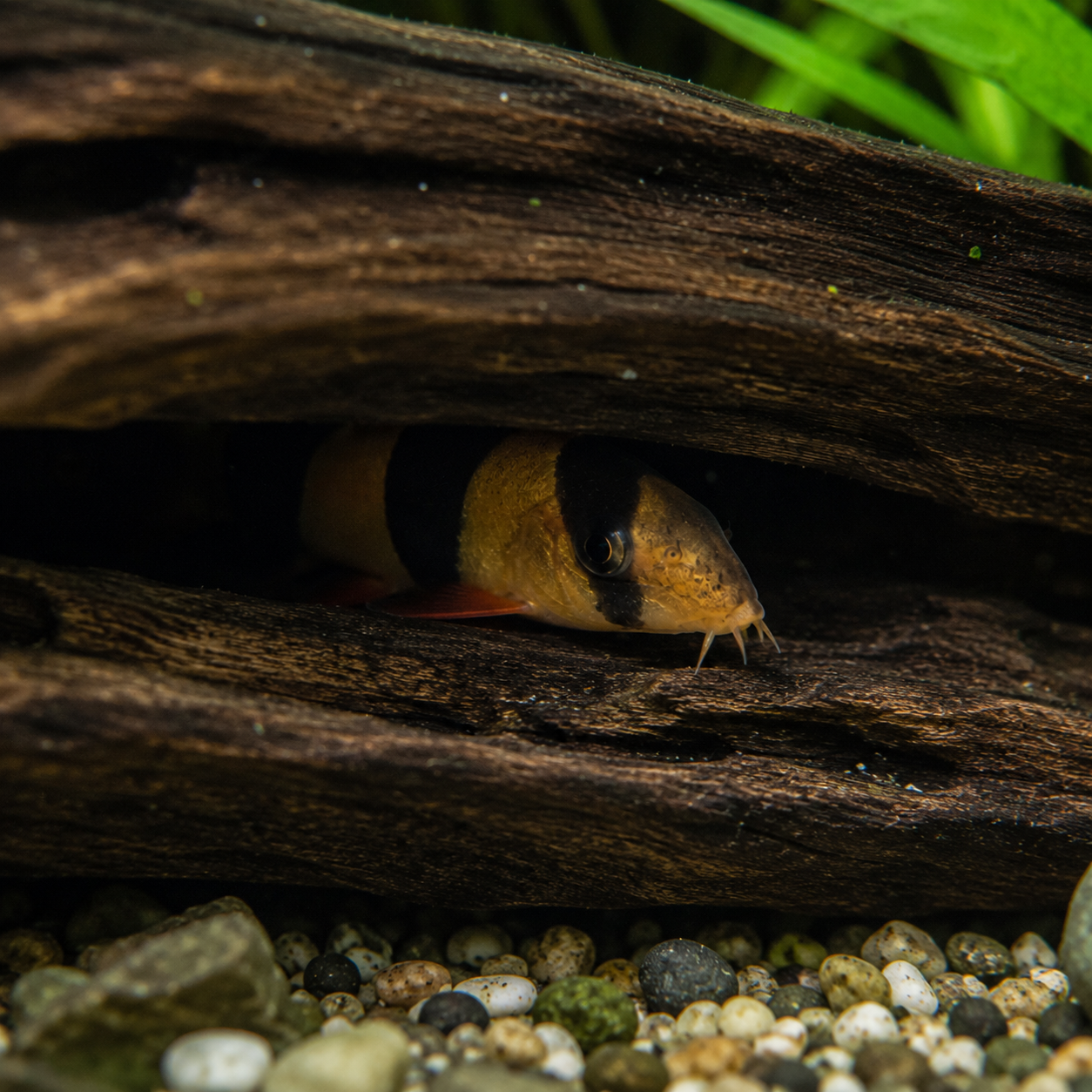
Unlike many bottom-dwelling species, Clown Loaches are highly active, inquisitive and often interact with both their tank mates and their owners. They are known for unusual behaviours such as resting on their sides, producing clicking sounds and exploring every corner of the aquarium.
Although commonly sold as small juveniles, Clown Loaches can grow significantly larger over time and require spacious aquariums to reach their full potential. Their long lifespan, peaceful temperament and entertaining behaviour make them a rewarding species for aquarists willing to provide the correct environment.
Given plenty of swimming space, stable water conditions and the company of other Clown Loaches, these charismatic fish can become the centrepiece of a thriving community aquarium for many years.

Ideal Tank Setup
Creating The Perfect Home For Clown Loaches
Clown Loaches require a spacious aquarium with excellent filtration, plenty of hiding places and a group of companions. A well-designed environment allows them to display their natural social and playful behaviour.
Tank Size
Start with at least 450 litres for a proper group, with larger aquariums strongly recommended as adults grow.
Group Size
Keep a minimum of five individuals. Larger groups help reduce stress and encourage natural schooling behaviour.
Filtration
Powerful biological filtration is essential to maintain stable water quality and handle their long-term size.
Swimming Space
Leave open areas for active swimming while still providing shelter and structure throughout the aquarium.
Hiding Places
Use caves, wood, rockwork and tunnels where Clown Loaches can rest together during the day.
Lighting
Moderate lighting works best, especially when combined with shaded areas created by wood and plants.
Water Parameters
Stable Warm Water Is Essential
Clown Loaches do best in warm, clean and well-oxygenated water. Stability is more important than chasing perfect numbers, especially in larger community aquariums.
Temperature
Keep between 25–30°C, with 26–28°C ideal for most community setups.
pH Level
A slightly acidic to neutral range of 6.0–7.5 is suitable.
Hardness
Soft to moderately hard water is best, around 5–12 dGH.
Ammonia & Nitrite
Both must always remain at 0ppm. Any reading needs urgent action.
Nitrate
Keep nitrates low, ideally under 20ppm with regular maintenance.
Water Changes
Change 25–35% weekly to maintain clean, stable conditions.
Feeding & Diet
A Varied Sinking Diet Keeps Them Healthy
Clown Loaches are omnivores that need a balanced diet of quality sinking foods, protein-rich treats and occasional vegetable-based foods.
Main Diet
Use high-quality sinking pellets, wafers and bottom-feeder foods as the daily base.
Protein Foods
Offer bloodworm, brine shrimp, daphnia and other frozen or live foods several times weekly.
Vegetable Foods
Include blanched courgette, cucumber, spinach or algae wafers for extra variety.
Feeding Style
Feed after lights dim or near hiding areas so shy loaches get enough food.
Portion Size
Only feed what they can clear within a few minutes to protect water quality.
Avoid
Do not rely only on flakes, and avoid overfeeding rich foods that pollute the tank.
Best Tank Mates
Peaceful Fish That Thrive Alongside Clown Loaches
Clown Loaches are peaceful, social fish that work best in large community aquariums with other active species that enjoy similar warm water conditions.
Angelfish
A classic combination in larger aquariums where both species have adequate space and stable water conditions.
Discus
Can work successfully in spacious, well-maintained aquariums with warm water and excellent filtration.
Rainbowfish
Active mid-water swimmers that add movement and colour without causing stress to loaches.
Peaceful Barbs
Species such as Denison Barbs make excellent companions in larger community aquariums.
Large Tetras
Congo Tetras and other larger schooling species complement Clown Loaches beautifully.
Other Clown Loaches
The most important companions are their own kind. Always keep them in groups of five or more.
Plants & Decorations
Natural Cover Helps Clown Loaches Feel Secure
Clown Loaches enjoy aquariums with shaded areas, smooth décor and safe hiding places. The goal is to create shelter without blocking too much swimming space.
Driftwood
Use branching wood and shaded roots to create natural cover and resting areas.
Caves
Add caves, tubes and tunnels large enough for the group to rest together safely.
Smooth Rocks
Choose rounded stones with no sharp edges to protect their delicate barbels.
Hardy Plants
Anubias, Java Fern and Vallisneria work well in warm loach aquariums.
Open Swimming Areas
Leave clear zones at the front and middle of the tank for active movement.
Dimly Lit Zones
Create shaded spaces using wood, floating plants or tall background planting.
Common Mistakes
Avoid These Clown Loach Care Problems
Most Clown Loach issues come from tanks that are too small, unstable water quality or keeping them without enough of their own kind.
Small Tanks
Juveniles may look small, but adults need a large aquarium with long-term swimming space.
Keeping Singles
Clown Loaches are social fish and should be kept in groups of five or more.
Poor Water Quality
They are sensitive to dirty water, so strong filtration and regular maintenance are essential.
Sharp Substrate
Avoid rough gravel or sharp décor that can damage their barbels and underside.
Wrong Tank Mates
Avoid aggressive fish, fin-nippers or species that cannot handle warm water.
Overfeeding
Too much rich food can quickly pollute the aquarium and cause health problems.
Frequently Asked Questions
Clown Loach FAQ
Answers to some of the most common questions asked by aquarists keeping Clown Loaches.
How big do Clown Loaches get?
Adult Clown Loaches can exceed 30cm in length and require large aquariums to reach their full potential.
Can Clown Loaches live alone?
No. They are highly social fish and should be kept in groups of at least five individuals.
Are Clown Loaches aggressive?
They are generally peaceful and work well in community aquariums with appropriately sized tank mates.
Do Clown Loaches eat snails?
Yes. They are well known for helping control pest snail populations in freshwater aquariums.
Why do Clown Loaches lie on their side?
This is completely normal behaviour. Healthy Clown Loaches often rest in unusual positions that can surprise new owners.
How long do Clown Loaches live?
With proper care they can live for 15–20 years or even longer in large, well-maintained aquariums.
Aquatic Academy Care Guide
Ready To Keep Clown Loaches?
Clown Loaches are intelligent, social and incredibly rewarding fish that can become the centrepiece of a large community aquarium. By providing warm stable water, plenty of swimming space, a varied diet and the company of other Clown Loaches, you can enjoy these iconic fish for many years.