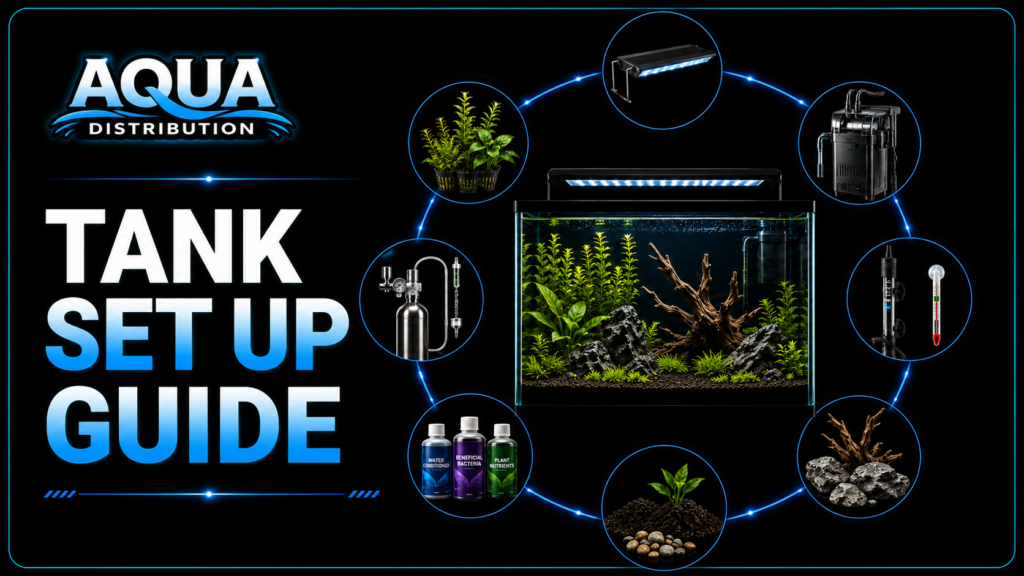
This complete aquarium tank setup guide covers everything you need to know to build a healthy, successful freshwater aquarium from day one. Learn how to choose the right aquarium, equipment, filtration, heating, lighting and substrate, as well as how to aquascape, fill and cycle your tank correctly. It also explains stocking, ongoing maintenance and common beginner mistakes, helping you create a stable environment where your fish can settle, thrive and grow.
Before You Start
A healthy aquarium starts with the right tank size, safe equipment, stable water and patience during the cycling stage.
Building A Healthy Aquarium Starts With The Basics
A successful aquarium is more than simply adding water and fish. Every tank relies on biological filtration, stable water conditions and suitable equipment working together to create a healthy environment for aquatic life.
Fish Need Stable Conditions
Sudden changes in temperature, water chemistry or filtration can stress fish and increase the risk of illness.
Water Quality Is Everything
Clean, stable water is the single most important factor in maintaining healthy fish and thriving plants.
Beneficial Bacteria Are Essential
These bacteria break down harmful waste products and form the foundation of the aquarium nitrogen cycle.
Equipment Supports Stability
Filters, heaters and lighting systems help create a consistent environment that supports long-term success.
Pick A Tank That Gives You Room To Succeed
The right aquarium size makes fishkeeping easier, more stable and more enjoyable. Larger tanks usually give beginners more room for error because water conditions change more slowly.
Bigger Is Usually Easier
Larger aquariums hold more water, which helps keep temperature and water chemistry more stable.
Think About Adult Fish Size
Always choose your aquarium based on the full adult size of the fish, not how small they are when purchased.
Allow Space For Decor
Substrate, wood, rocks and plants all take up space, so leave enough swimming room for your fish.
Plan Your Stocking Early
Decide what fish you want before buying the tank, so the aquarium suits their needs from day one.
The Equipment Every Aquarium Needs
Choosing quality equipment from the start helps create a stable environment for fish and reduces problems later. The exact equipment may vary depending on your setup, but these are the essentials for most tropical aquariums.
Filtration System
A quality filter removes waste, provides water circulation and houses beneficial bacteria that support the nitrogen cycle.
Aquarium Heater
Most tropical fish require stable temperatures, making a reliable heater essential for long-term health.
Lighting
Aquarium lighting improves viewing, supports plant growth and helps maintain a natural day and night cycle.
Water Test Kits
Testing ammonia, nitrite, nitrate and pH allows you to monitor water quality and catch issues before they affect fish.
Building Your Aquarium The Right Way
Taking time to properly set up your aquarium creates a safer environment for fish and helps avoid common beginner mistakes. Follow a logical process and avoid rushing the setup stage.
Choose The Right Location
Place your aquarium on a strong, level surface away from direct sunlight, radiators and areas with heavy foot traffic.
Add Substrate & Decor
Position gravel, sand, rocks, wood and decorations before filling the aquarium to make aquascaping easier.
Fill With Water Carefully
Add water slowly to avoid disturbing the substrate. Use a water conditioner to remove chlorine and chloramine.
Install & Test Equipment
Ensure filters, heaters, lighting and air pumps are working correctly before beginning the cycling process.
Let The Tank Become Safe Before Adding Fish
Cycling allows beneficial bacteria to grow inside the filter and aquarium. These bacteria help process fish waste and make the tank safer for livestock.
Build Beneficial Bacteria
Beneficial bacteria live mainly inside the filter media and help convert harmful waste into less harmful nitrate.
Test The Water Regularly
Monitor ammonia, nitrite and nitrate so you know when the aquarium is becoming biologically stable.
Be Patient
Cycling can take several weeks, so avoid rushing the process or adding too many fish too quickly.
Add Fish Slowly
Once the tank is cycled, introduce fish gradually so the filter bacteria can adjust to the increased waste load.
Keep Your Aquarium Stable Long Term
Regular maintenance keeps water quality stable, equipment working properly and fish healthier. Small consistent routines are better than large rushed clean-outs.
Carry Out Water Changes
Replace part of the aquarium water regularly to help reduce waste, refresh minerals and keep conditions stable.
Clean Glass & Substrate
Remove algae from the glass and gently clean debris from the substrate without stripping the tank completely.
Maintain The Filter
Rinse filter media in old tank water when needed, helping protect the beneficial bacteria living inside it.
Test Water Parameters
Check key water readings regularly so you can spot issues early and correct them before they affect your fish.
Tank Setup FAQs
Answers to some of the most common questions new fishkeepers ask when setting up an aquarium.